Expert
Talks
@ The Future of Hematology
AI, Harmonization, and Human Supervision
Marie Christine Béné
Emeritus Professor, Faculty of Medicine, University Hospital of
Nantes, France

Before You Read On
Hematology analysis ranks as the world's most frequent and highest-priority laboratory examination. Identifying blast cells is fundamental to the early treatment of malignancies. However, it has long been extremely difficult to tell if an abnormal cell is truly a blast. In this episode, Professor Marie Christine Béné draws on decades of experience in laboratory medicine to explain how AI is solving this industry pain point. She redefines the future of laboratories through the lens of "harmonization," offering forward-thinking insights into the Intelli-Digital development of laboratory medicine.
Key Highlights
- AI-assisted identification: a paradigm shift in hematology analysis
- From "standardization" to "harmonization": new opportunities for the future of laboratories
- New requirements for industry harmonization and the development of guidelines
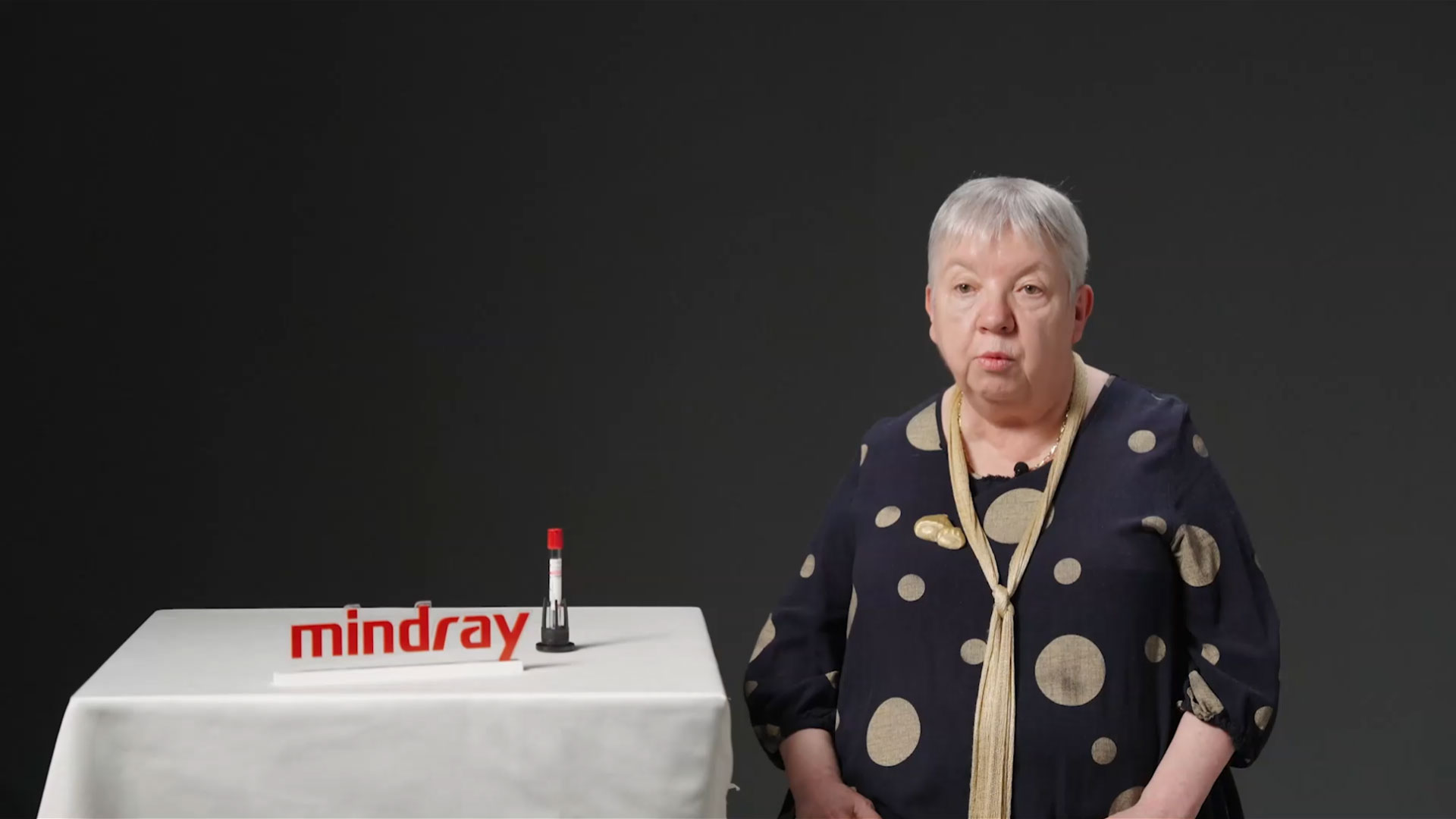
Key Takeaways
AI-Driven Breakthroughs
Professor Marie Christine Béné highlights two advantages that AI brings:
First, it allows multiple people to look at the same cells
simultaneously and decide together if they're blast cells. Instead of
one person working alone at a microscope, images can now be easily
shared with other medical professionals for collaborative confirmation.
Second, it provides a good learning path for young technicians. AI
helps them to know much faster what the cells look like, significantly
shortening the learning curve.
From Standardization to Harmonization
When discussing the future development of laboratories, Professor Marie Christine Béné suggests that "Harmonization" may be a more appropriate descriptor than "Standardization."
This is because laboratories across the world differ in terms of operators, test samples, and equipment models. Demanding absolute "standardization" is unrealistic. Instead, the priority should be establishing a mechanism for mutual harmonization—one that enables different laboratories and various testing technologies to produce consistent results.
The establishment of such a mechanism cannot rely solely on equipment manufacturers. It requires deep collaboration between industry players, diagnostic experts, and researchers, ensuring the active involvement of frontline clinical personnel who work directly with patients and perform the testing.

Marie Christine Béné's keywords for the "Medical Laboratory of the Future" are:
Supervision
Connection
Usefulness