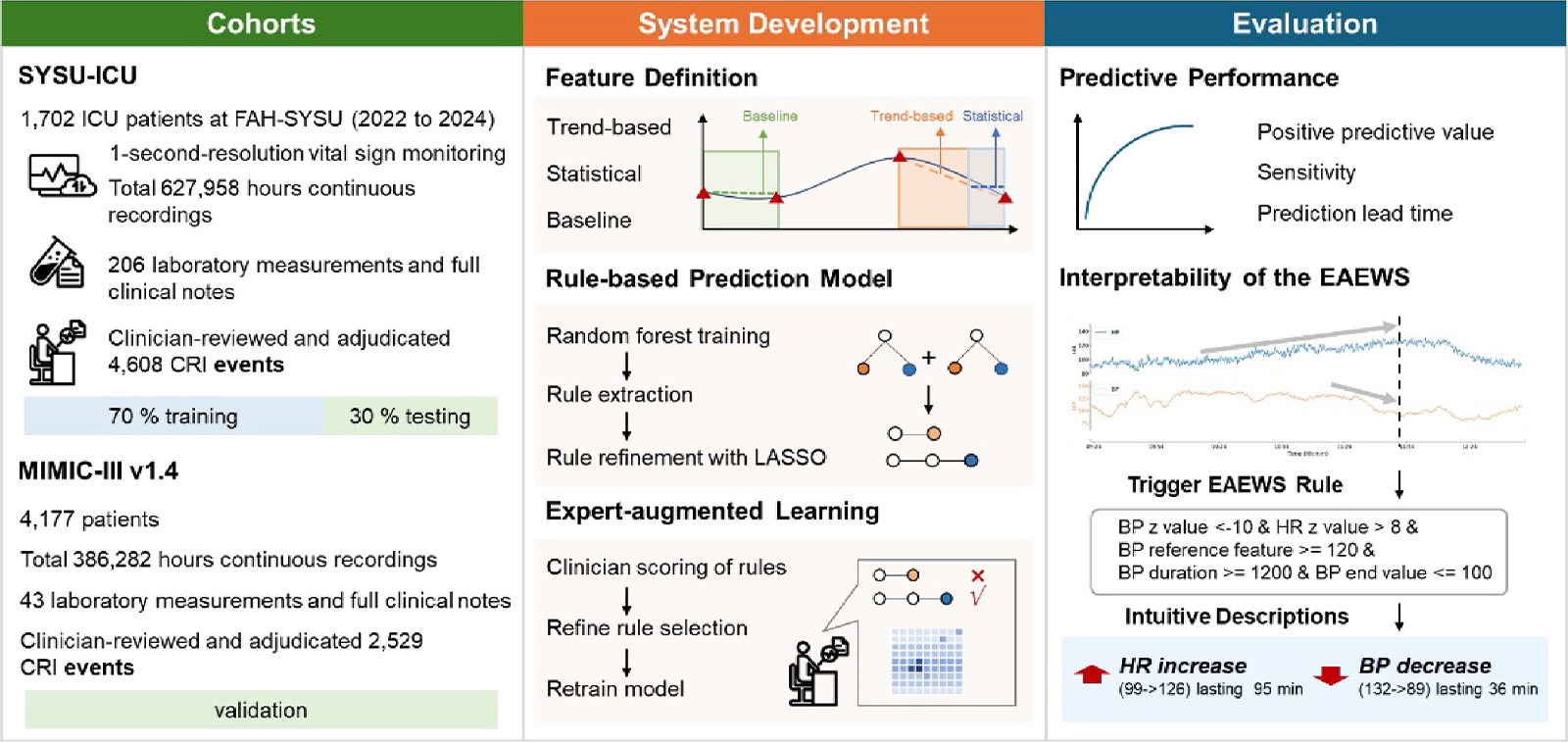
Study Overview
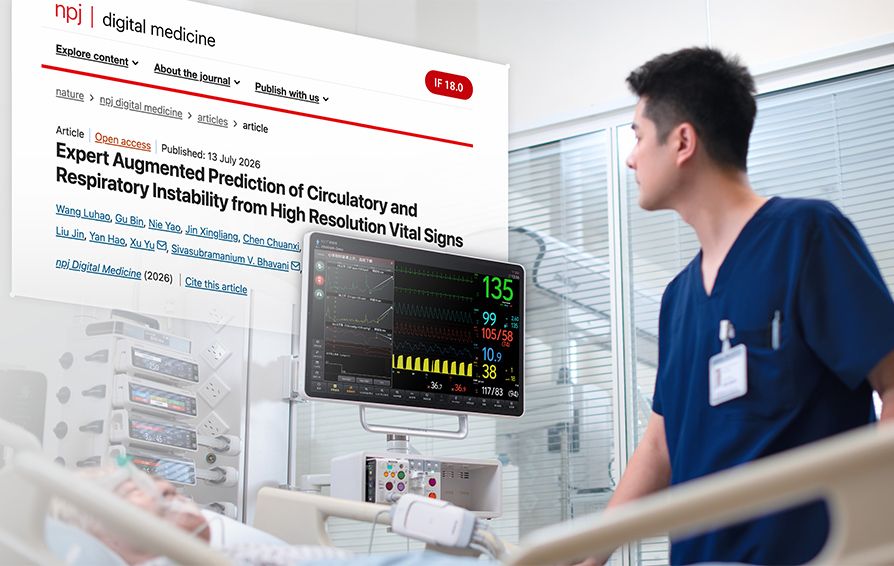
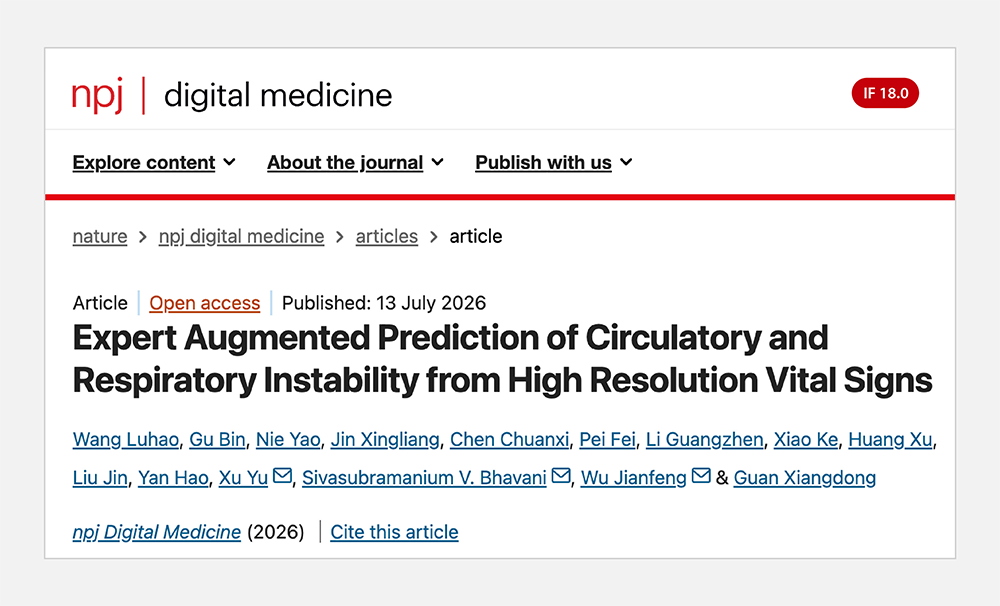
The study findings were published in npj Digital Medicine
The Expert-Augmented Early Warning System (EAEWS), an interpretable early warning model jointly developed by Prof. Guan Xiangdong and Prof. Wu Jianfeng's team at the Department of Critical Care Medicine, The First Affiliated Hospital, Sun Yat-sen University ("FAH-SYSU"), in collaboration with Mindray's R&D team, was recently published in npj Digital Medicine, one of the world's most influential journals in medical artificial intelligence with an impact factor of 18.0. The achievement has sparked widespread attention across the industry.
This study delivered two major breakthroughs. First, a machine learning model was built by fully harnessing the high-precision data captured at the device level and deeply mining trend-change features across multiple parameters. Built solely on bedside monitoring data, the model achieves performance comparable to that of models using multimodal data. Second, the innovative Expert-Augmented Machine Learning (EAML) approach was introduced, opening up the "black box" of AI-driven medical applications and addressing the lack of transparency in the decision-making process of early warning models. This truly ensures that risks are precisely visible, early warnings are fully interpretable, and clinical decisions are made with greater confidence.
Study Overview
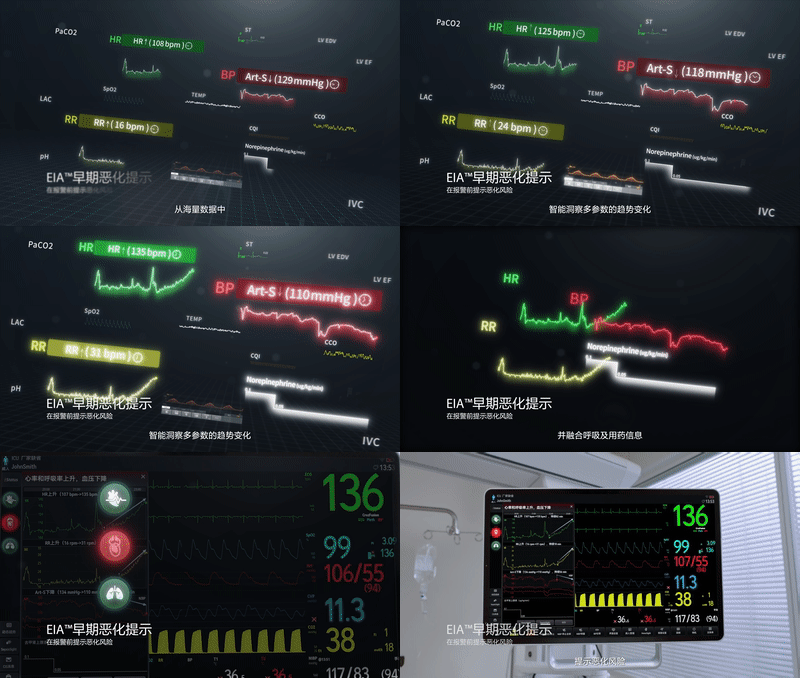
BeneVision V Series Patient Monitors - EIA
Notably, Mindray has brought Early Insight Assistant (EIA) — an EAEWS-based function that provides early warning of patient deterioration in the BeneVision V Series patient monitors — into real-world clinical practice. Best of all, the feature requires no additional infrastructure: it runs directly on existing ICU bedside monitors, making it clinically accessible and easy to implement.
Based on high-resolution, second-by-second vital sign data provided by bedside monitoring equipment, this study extracts multi-parameter trend features (including baseline parameter values, direction of change, magnitude of change, and duration of trend) closely correlated with changes in patient conditions, to build an early warning model for cardio-respiratory instability risk.
The model demonstrated higher predictive accuracy in both SYSU-ICU internal validation and MIMIC-III external validation. In terms of the two core metrics, AUROC and AUPRC, it consistently outperforms other single-parameter models such as SI and BP, as well as models that do not incorporate trend features.
(Tip: AUROC reflects the model's overall ability to distinguish between high-risk and low-risk situations. AUPRC demonstrates the model's ability to balance "fewer false negatives" and "fewer false positives" in identifying a small number of high-risk events.)
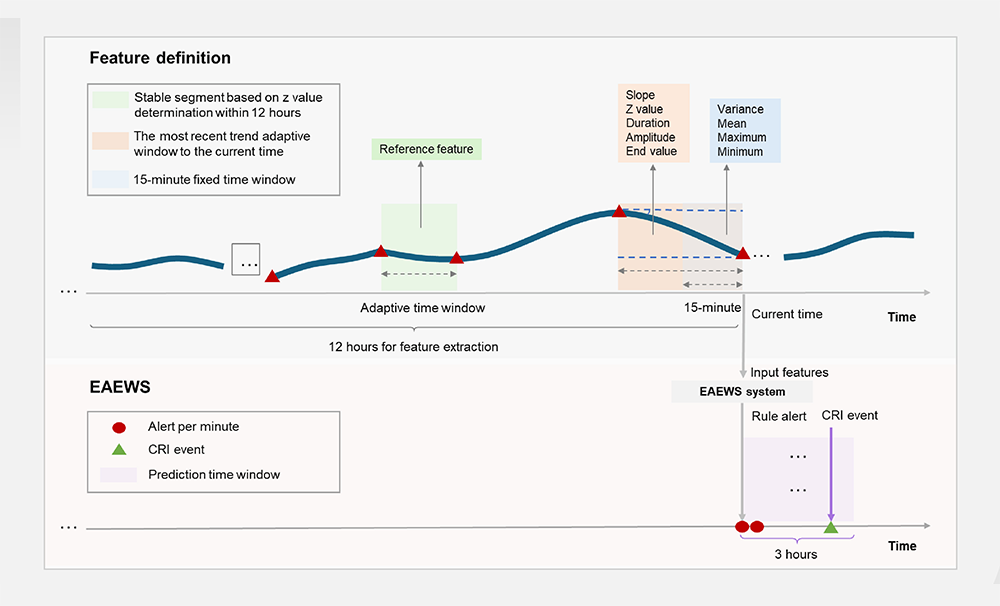
Feature extraction from high-resolution vital-sign time series
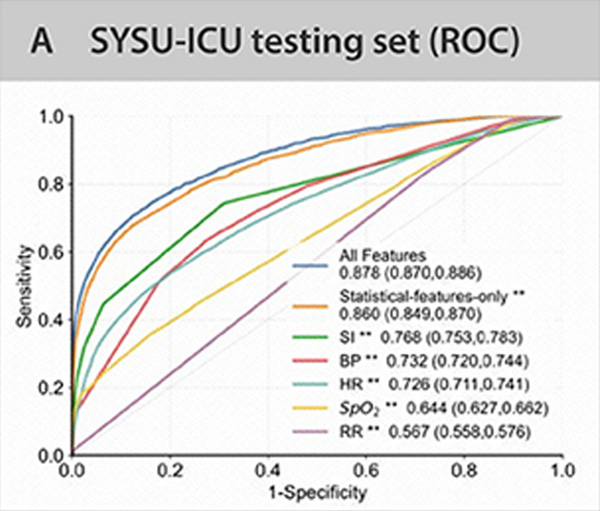
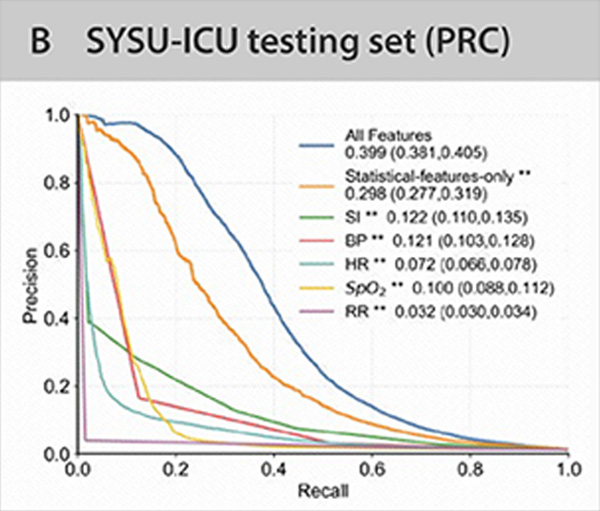
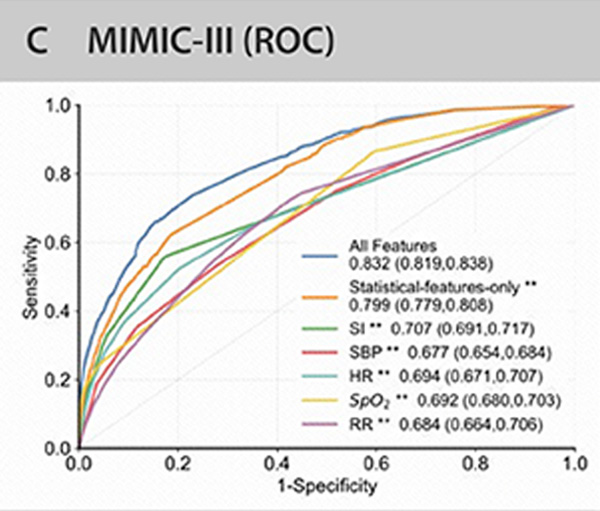
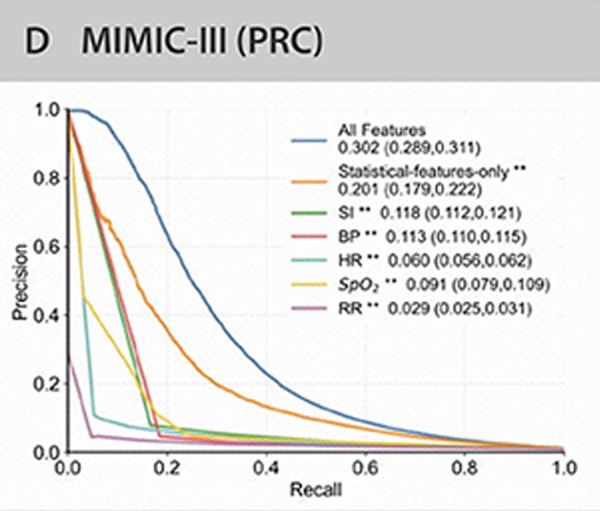
Performance comparison of early warning models based on vital signs in SYSU-ICU and MIMIC-III
The results show that the model incorporating second-by-second, high-resolution trend feature data delivers better early warning identification capability, confirming that a high-performing warning system can be built using bedside monitoring equipment alone.
If high-resolution data addresses the challenge of "detecting risks earlier," then "Expert-Augmented Machine Learning" solves the puzzle of "why this judgment is made."
By applying tree-based models to analyze and transform the data into rules, and incorporating reviews and judgments from multiple senior critical care experts, the team developed the Expert-Augmented Early Warning System (EAEWS) consisting of 180 high-value rules. Each rule consists of multiple feature threshold conditions and corresponds to a specific physiological imbalance pattern.
This means that when the system sends an early warning, it also shows the key reasons behind it, making the previously hidden algorithmic decision-making process easily understandable and traceable.
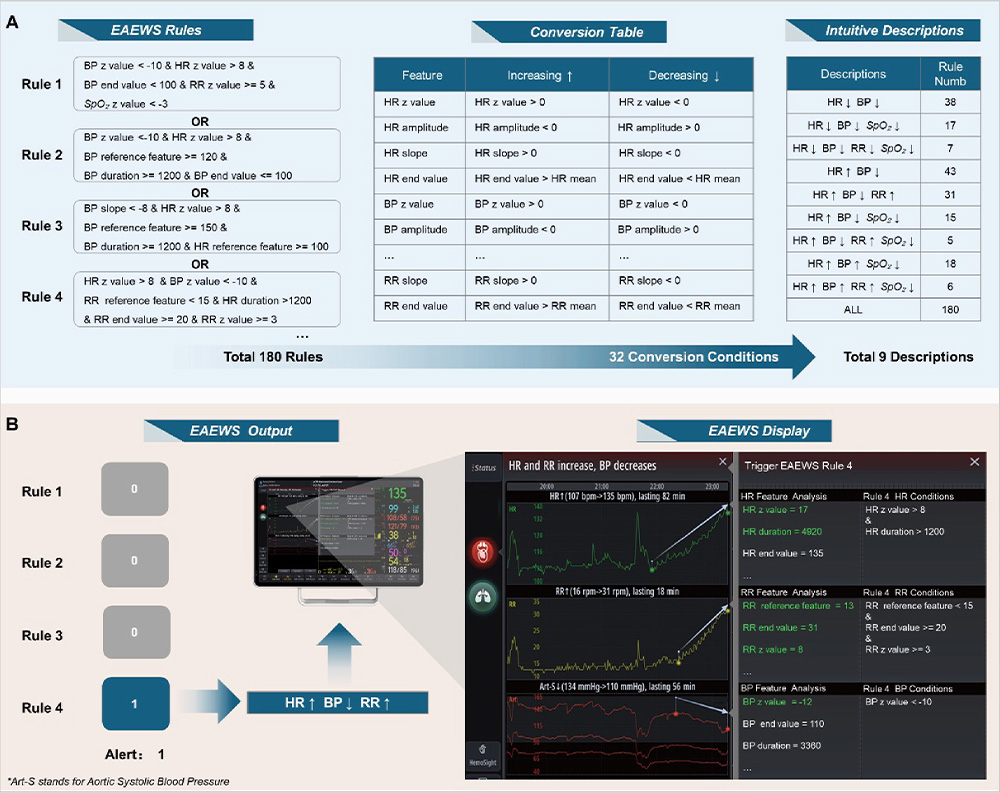
Example of EAEWS clinical interface integrating real-time vital signs monitoring
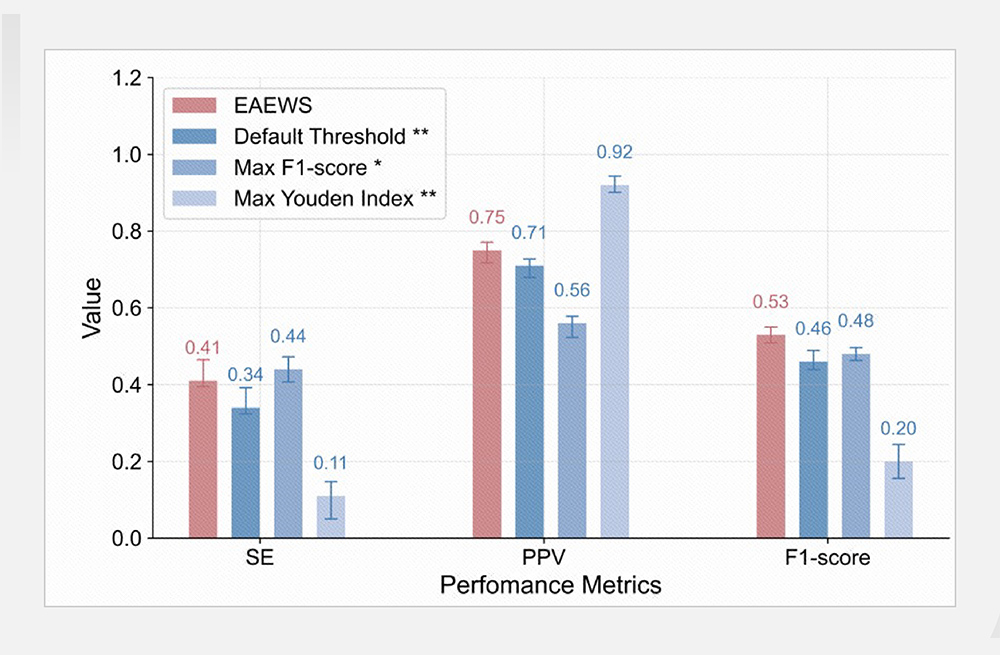
Model performance in external validation under different decision thresholds
In the MIMIC-III external validation, EAEWS achieved an F1 score of 0.53, outperforming the Random Forest model at the default probability threshold of 0.5 (F1 score of 0.46), thereby demonstrating superior overall identification capability.
(Tip: The F1 score is a key metric for comprehensively evaluating a model's identification performance. A higher value indicates a better balance between reducing false positives and false negatives.)
In a comparison of early warning timeliness within a 3-hour risk window, EAEWS can issue effective early warnings on average 20 minutes in advance, with a positive predictive value (PPV) exceeding 70%. This further demonstrates that the system not only delivers superior early warning capabilities, but also combines high alert accuracy with minimal clinical disruption, thereby helping to mitigate alarm fatigue.
The findings of this study will provide intelligent support for monitoring critically ill patients, while charting a new practical path for bringing medical AI from the lab to the bedside.
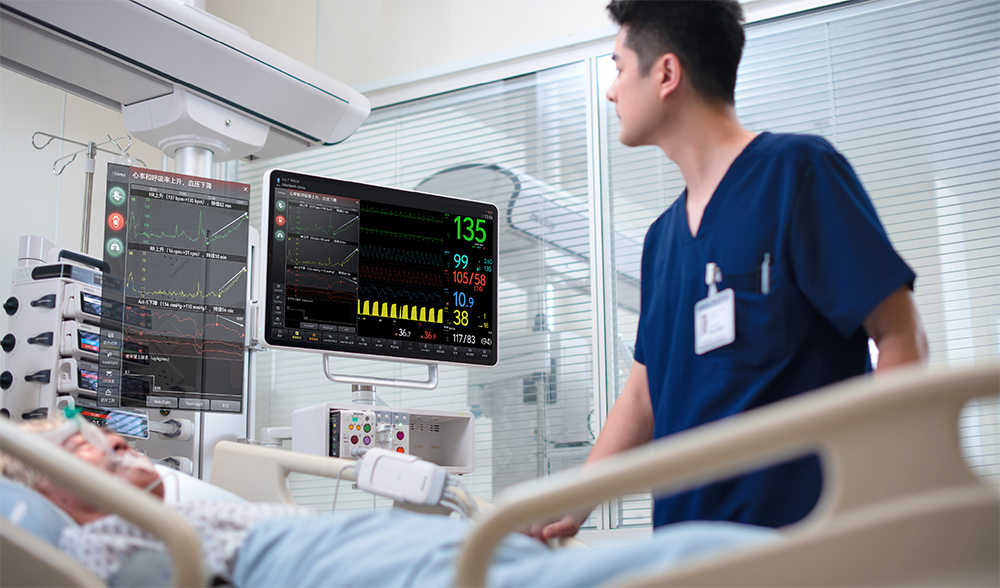
Clinical application scenarios of the EIA
Moving forward, Mindray remains committed to partnering with clinical experts to drive collaborative research and technology translation in emergency and intensive care. By aligning AI capabilities with practical clinical needs, we are speeding innovations from the lab to the bedside — to support medical teams, elevate patient outcomes, and drive intelligent medicine forward.