To See Is to Begin Healing: Mindray Ultrasound Supports an Australian Rehabilitation Specialist
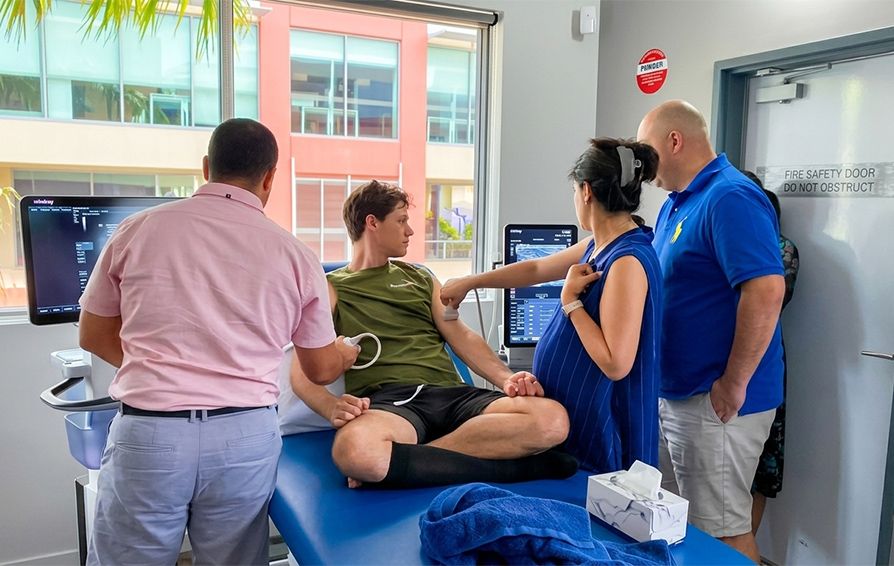
In medicine, real progress comes from clarity. Dr Warren Jennings-Bell, an Australian specialist in rehabilitation medicine, has built his practice around it. He has shifted ultrasound from a tool that simply observes to one that actively guides treatment. The difference is simple: when you can truly see, you can treat with confidence.

Dr Jennings-Bell practises at NeuroRehabilitation Sunshine Coast, where he specialises in ultrasound-guided botulinum toxin injections for conditions such as spasticity and cervical dystonia following stroke, brain injury and spinal cord injury.

Seeing the Opportunity
For many, post neurological spasticity is difficult and often under treated. Dr Jennings-Bell saw the scale of the need. In Australia, there are more than 445,000 stroke survivors. Around 30 per cent develop spasticity, and roughly half of those require treatment. That is more than 65,000 people who need targeted intervention, not including patients with cerebral palsy or multiple sclerosis.
These are not just numbers. They are patients living with pain, loss of function and reduced independence. For Dr Jennings-Bell, delaying effective treatment is not acceptable.
Precision Changes Everything
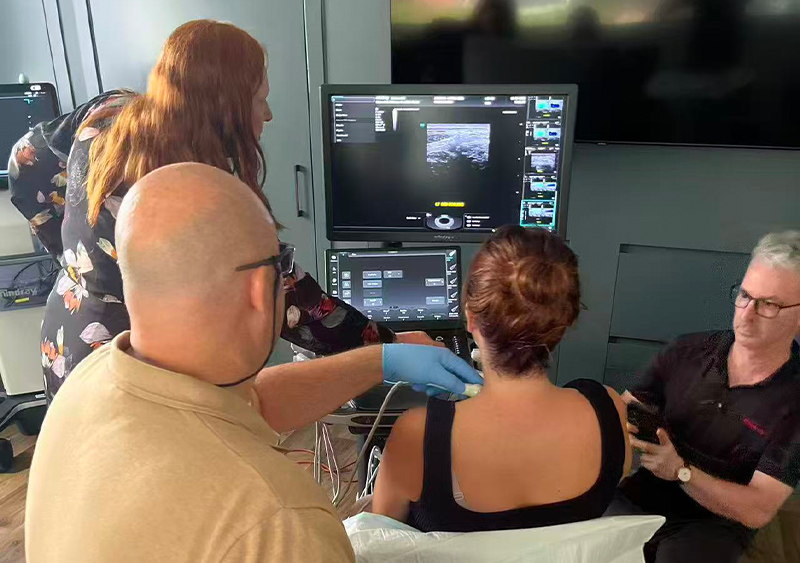
Ultrasound allows him to move beyond estimation. It replaces guesswork with precision. In one case, he identified the exact cause of a patient’s leg pain: a blood vessel compressing the sciatic nerve due to muscle tension. With clear visualisation, he was able to treat the precise point. One injection resolved the pain.
This is the shift. From “around here” to “exactly here”.
Understanding Comes First
For Dr Jennings-Bell, imaging alone is not enough. His approach is grounded in one principle: if you do not fully understand it, do not proceed.
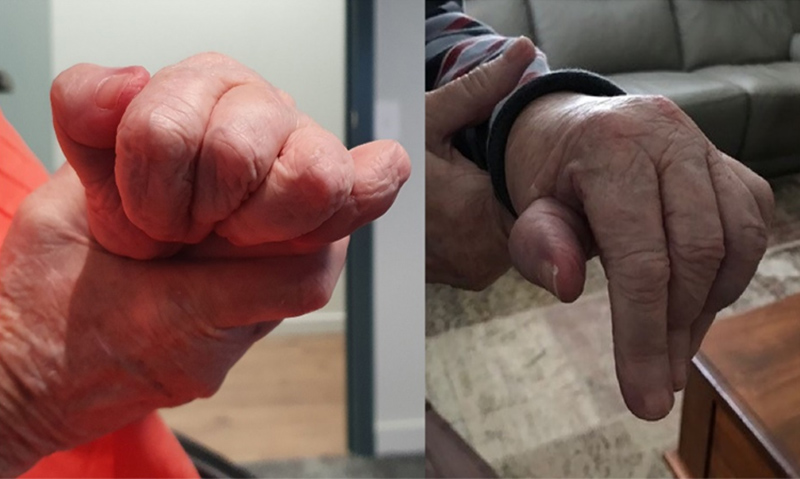
True case picture
He critically evaluates emerging techniques, reviewing the evidence rather than following trends. His work is underpinned by a deep understanding of anatomy, particularly the smaller, often overlooked muscles that play a significant role in complex conditions like cervical dystonia.
That attention to detail directly impacts outcomes. In one case, he treated a patient whose hands had been clenched for eight months. Precise dosing was critical. Too little would fail. Too much would compromise strength. With a targeted approach, the patient regained the ability to open their hands within weeks.
Supporting Better Practice
Dr Jennings-Bell regularly delivers training courses across Australia, working with clinicians to improve ultrasound guided practice. In these settings, access to high quality imaging is essential. Clarity, consistency and reliability matter when teaching precision.
Through his partnership with Mindray, he utilises Mindray ultrasound systems during these courses. The combination of image quality and usability supports both teaching and real time clinical application, helping clinicians build confidence in their technique.

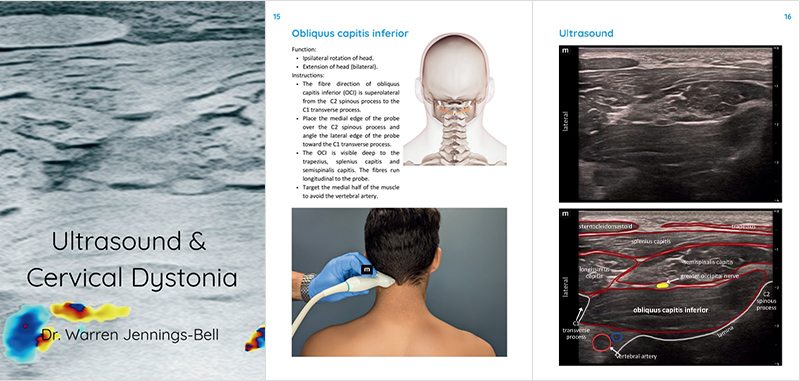
Dr. Jennings-Bell’s new book about Ultrasound & Cervical Dystonia was released recently
Better Outcomes Through Better Visibility
Dr Jennings-Bell’s work reinforces a simple idea. Better visibility leads to better decisions, and better decisions lead to better patient outcomes. This is where the right technology makes a difference. Not as a headline, but as a reliable enabler of good clinical practice.
By supporting clinicians with clear, dependable imaging, Mindray ultrasound systems help turn insight into action and improve the way care is delivered every day.