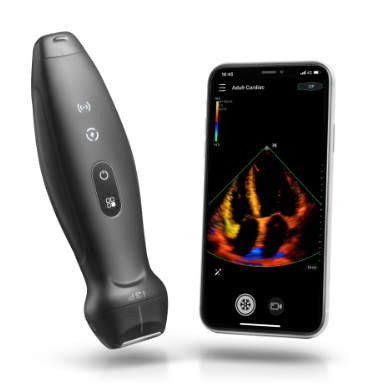
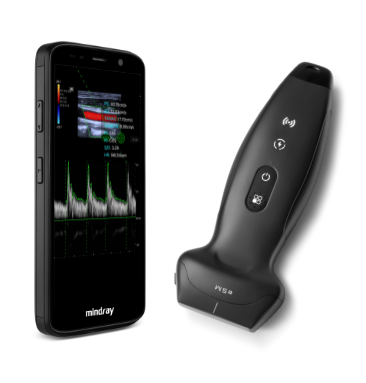
On the Pitch, Pocket-sized Ultrasound Safeguards National Team Under 21
As the whistle of the 2026 FIFA World Cup blows, the world turns its eyes to football – a sport that unites and excites people across the globe. But behind every stunning goal and triumphant victory, there is an often invisible battle that players fight: the battle against injury. Medical teams and equipment have become absolutely vital – particularly when it comes to young players who are still growing and developing.
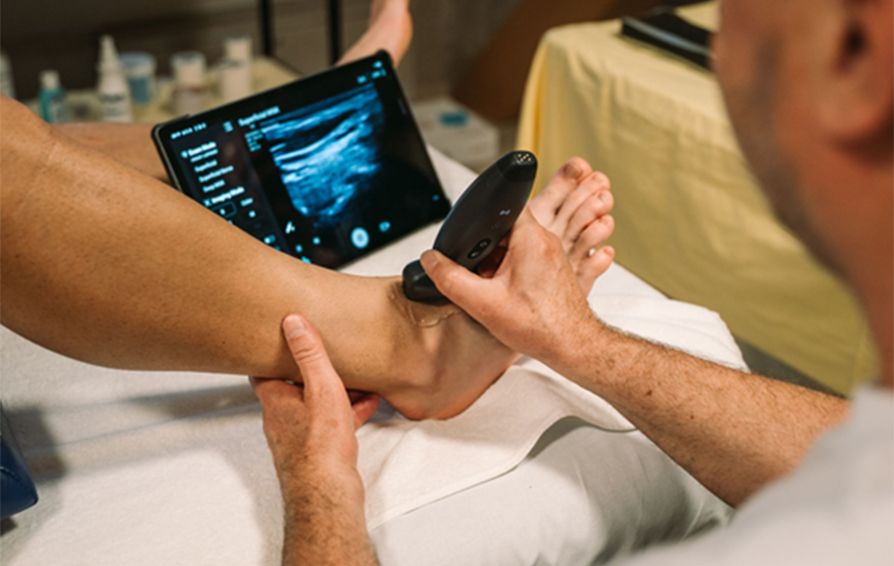
On the sidelines of the Czech national football U21 team's training ground, Dr. Rukavička – Head Physioterapist of FC Viktoria Plzeň who has many years of experience in elite sports and with the national soccer team, is currently the head physiotherapist of the Czech U21 national team—the “Lvíčata” (“Lion Cubs”) – reaches into his coat pocket and pulls out a ultrasound device no bigger than the palm of his hand. He uses Mindray's Wireless Handheld Ultrasound TE Air to perform a quick pre-match scan on the young U21 players about to take to the field. It has become a unique and reassuring part of the team's medical routine – helping to safeguard the next generation of football stars.
The Silent Killer:
When Injury Brings a Career to a Halt
For professional athletes, few things are more feared than injury. Statistics show that in Europe's top five football leagues, 22,000 injuries were recorded between 2020 and 2025. The total wages paid to sidelined players during that period are estimated at €3.45 billion[1].
And this is not just a European story. A three-season study (2021–2024) of one football team found that 90.7% of its first-team players suffered injuries[2]. That means, over a long season, nearly every single player is playing through pain.

Source: Czech national football team official account
Beyond the financial toll on clubs, injuries are a major career hurdle for footballers. Research shows that after returning from a muscle injury, players see a significant drop in top speed, acceleration, deceleration, overall performance index, and sprint count. The longer the recovery, the worse the performance. Protecting players has become a top priority for clubs everywhere[3].
By Their Side:
Portable Ultrasound Safeguards Young Players
Among all the players who need protection, one group stands out: young athletes who are still growing. With developing bones and ongoing physical changes, they are more vulnerable to injury. Yet they are also the future of the sport – the backbone of their national teams.
That's why the Czech national football team places such importance on ultrasound monitoring for its U21 players. With ongoing growth potential, timely support, proactive health monitoring and rapid injury rehabilitation are critical.
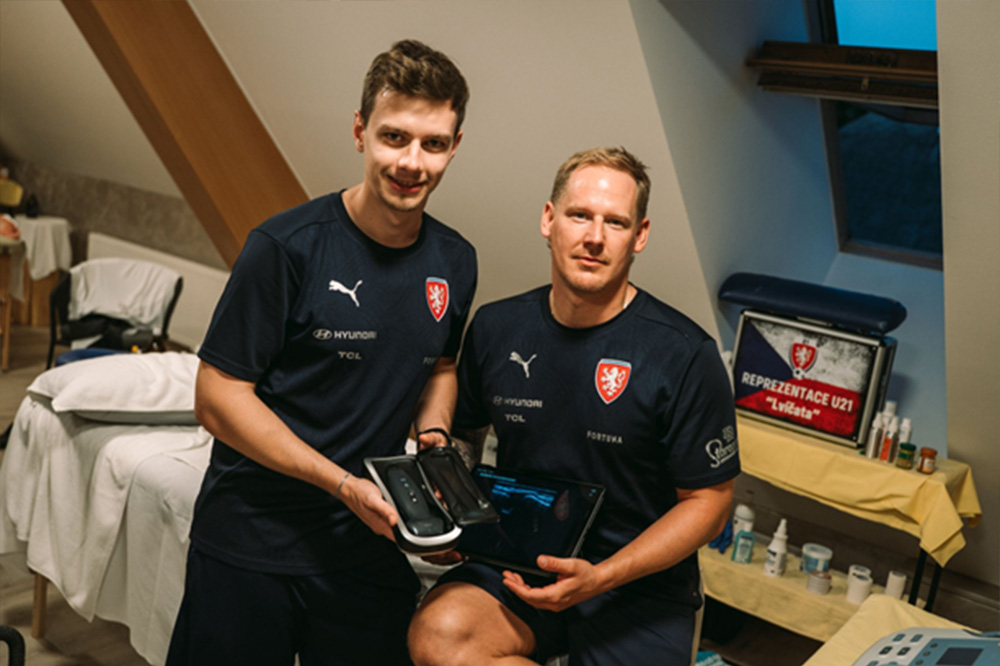
Sports physiotherapists of the Czech Republic U21 National Team: PhDr. Tomáš Hybner and PhDr. Michal Rukavička.
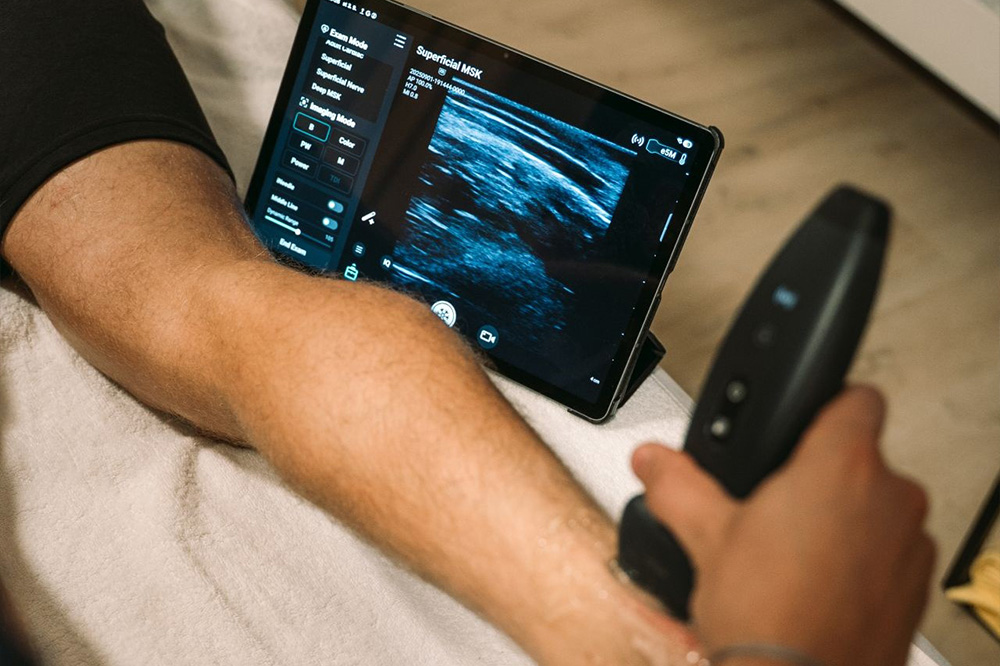
Mindray's wireless pocket-sized ultrasound TE Air provides fast, precise musculoskeletal and joint examinations. It is fully wireless – connecting to a smartphone or tablet – and features fast charging, rugged durability, and easy cleaning to withstand tough conditions. No longer confined to the medical room, it accompanies the team doctor to training sessions and matches, safeguarding athletes everywhere.
For outdoor conditions, device integration is key: the single TE Air probe allows multi-site scanning without probe changes, and its 20+ specialized exam modes include dedicated presets for MSK, nerve, and small organs.
Dr. Michal Rukavička
Head Physician of FC Viktoria Plzeň
This is a compact device that fits in your pocket, but it can effectively help gamers and physiotherapists – both in the office and anywhere on the go.
Eyes on the Field:
Seeing Injury Before It Hurts
The portability of ultrasound brings another major advantage: beyond quickly assessing injuries during and after games, the team doctor can also perform risk screenings in a wide range of settings – stopping threats before they even start.
Risk screening for athletes is becoming more common. In recent years, football clubs and medical institutions around the world have been increasingly adopting musculoskeletal ultrasound to accurately identify chronic strains, joint effusions, apophysitis (bone growth plate inflammation), and other early, hidden injuries that are invisible to the naked eye. The goal is early detection and early warning.
One study found that pre-training ultrasound can reveal asymptomatic tendon abnormalities. Athletes with such abnormalities face a relative risk of injury up to 21 times higher than those without. Ultrasound scanning is a better predictor of future sports injuries than the athlete's own reported medical history or feelings of pain[4].
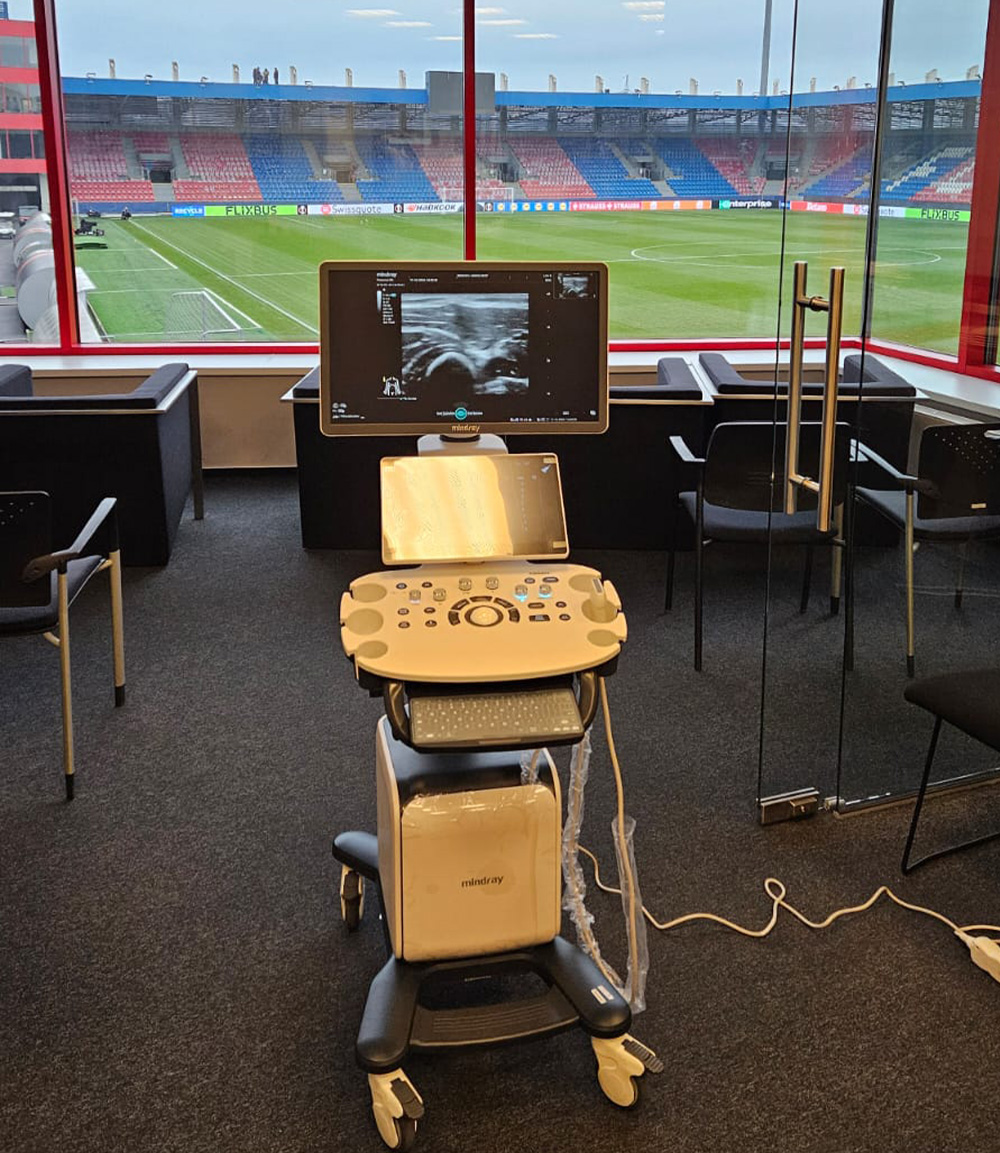
Mindray Consona N6 on Pilsen Arena
Champions league match Viktoria Plzeň – Manchester United
Today, ultrasound has become an increasingly important tool in sports medicine. Its portability and resolution are opening up new possibilities for screening and prognosis in clubs and medical institutions.
As ultrasound moves from hospital imaging departments to the green pitch – evolving from a treatment tool into an early warning mechanism – more young dreamers, just like the Czech U21 players, can enjoy better protection throughout their careers. They can stay clear of the shadow of injury and race across the field without a worry.
Reference:
[1] 《Howden’s 2024/25 Men’s European Football Injury Index》
[2] Bezuglov E.N., Malyakin G.I., Etemad O.A., Baranova D.S., Vinogradov
M.A., Goncharov E.N. Injury epidemiology of the Russian Premier League
leading soccer team during the competitive seasons 2021–2022 and
2023–2024. Sports medicine: research and practice. 2024;14(4):13-20. (In
Russ.) https://doi.org/10.47529/2223-2524.2024.4.5
[3] Pecci J, Sánchez-Trigo H, Mancha-Triguero D, et al. Return to
performance: machine learning insights into how absence time following
muscle injuries affects match running performance in LaLiga soccer
players. Biology of Sport. 2025;42(4):275-286.
doi:10.5114/biolsport.2025.151651.
[4] Cushman D M , Stokes D , Vu L ,et al.Ultrasound as a predictor of
time-loss injury for the patellar tendon, Achilles tendon and plantar
fascia in division I collegiate athletes[J].British Journal of Sports
Medicine, 2025, 59(4).DOI:10.1136/bjsports-2024-109066.