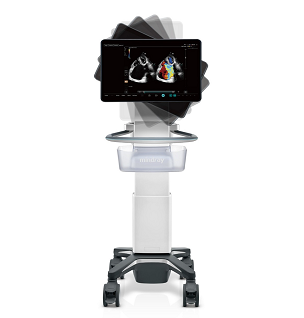
Keeping Pace with Emergency: TEX20 POC Ultrasound Ready at Every Turn

An ultrasound machine in the emergency room must be one thing above all else: ready for immediate use. In moments when every second counts, there is no room for technical delays or cumbersome procedures. A wide range of diagnostic questions demand rapid answers - and a reliable overview of the patient's condition. At the only emergency medical center in the region stretching from the Black Forest to the Rhine in Germany, emergency and intensive care physician Dr. Christoph Schmitz explains why the Mindray ultrasound solution is ideally suited to meet these challenges.
Dr. Schmitz serves as head physician of the emergency department at Hochrhein Hospital in Waldshut-Tiengen—an academic teaching hospital of the University of Freiburg. His team confronts approximately 33,000 emergency cases annually, a significant burden for the local system. Time, therefore, is the currency of care. The TEX20 Series point-of-care ultrasound empowers these clinicians to reimagine their practice amid the unrelenting demands of the emergency environment.
Dr. Christoph Schmitz
Head Physician of the Emergency Department
Hochrhein Hospital, Germany
I switch the device on and can get started immediately - without having to wait for long boot times or navigate through complicated menus. This allows me to concentrate fully on the patient, and the ultrasound is essentially as readily available as a ballpoint pen.
High Image Quality for All Organ Systems
TEX20 delivers consistently high image quality across all probes - from the phased-array transducer for the heart and the curved array transducer for the abdomen to the linear transducer for superficial structures such as vessels, nerves, and soft tissues. This means the TEX20 covers all areas of application relevant to emergency medicine.
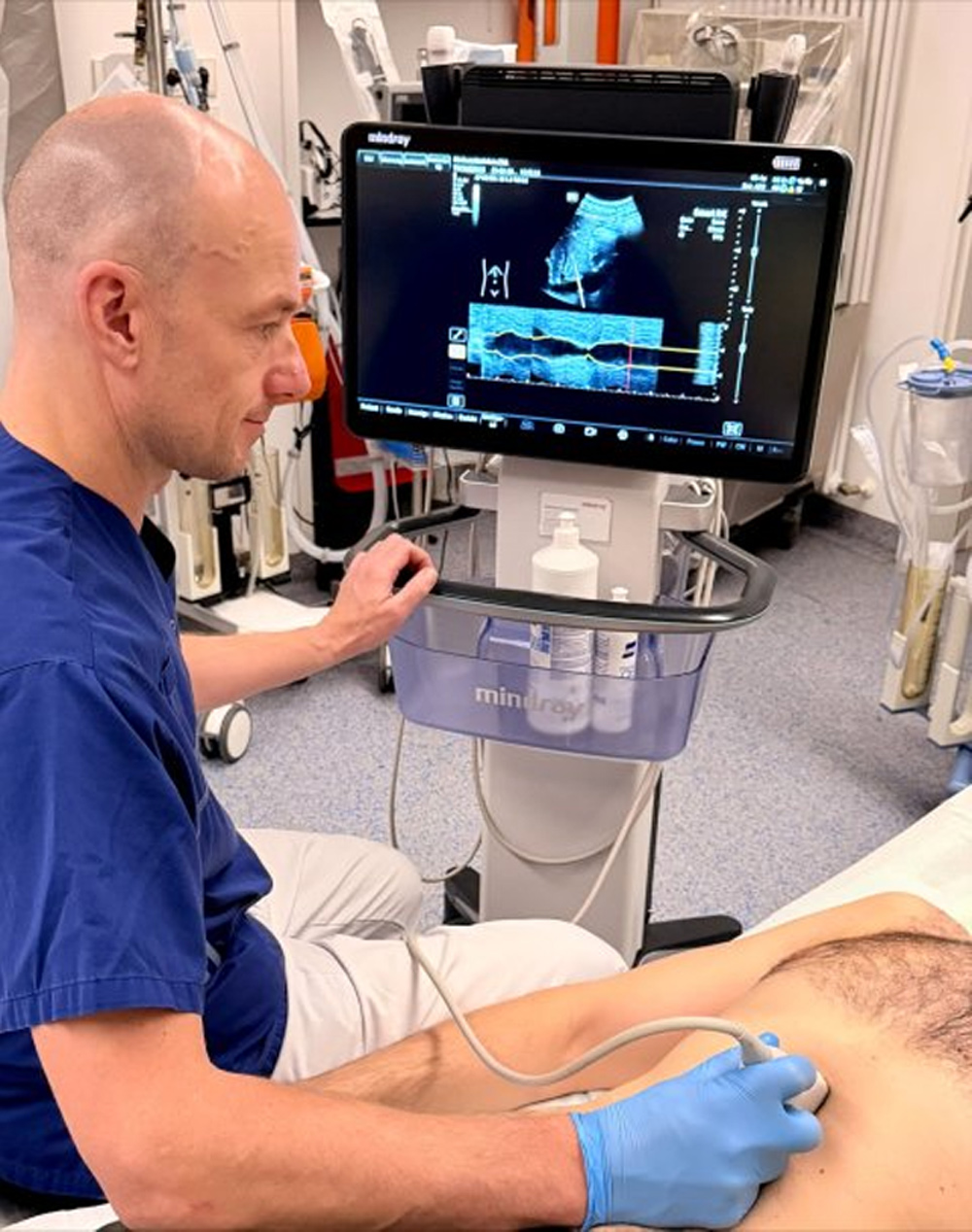
The precise imaging even allows certain radiological examinations to be avoided or at least reduced. For example, a pneumothorax can be reliably detected in lung diagnostics, making an X-ray unnecessary. Bone ultrasound is also now well-established and already provides a sufficient basis for diagnostic decision-making in selected situations. "What the TEX20 also offers is excellent needle visualization," adds Dr. Schmitz. "We therefore frequently use it for catheter placements, punctures of fluid collections, and regional anesthesia."
From Corridor to Critical Bed
The TEX20 Keeps
Pace
Transporting patients in the Hochrhein Hospital often leads through long corridors and winding rooms. Therefore, an ultrasound machine that can be easily transported is essential. With its large, smooth-rolling casters, the TEX20 offers effortless maneuverability, including the ability to rotate on the spot. Dr. Schmitz finds the cable management particularly well-designed: "The probes are suspended so high that it's practically impossible to run over the cables - one less thing for me to worry about."
The TEX20's power solution has also impressed the hospital. Its battery covers not just short transits but several hours of active use. Charging is wireless via an induction station—highly convenient and keeping the unit neatly parked when not in use. For extended deployments, conventional mains power is always an option, with a retractable cable that stows into the housing like a vacuum cleaner, eliminating clutter and trip hazards.
In emergency medicine, everything yields to saving lives. The TEX20's expansive touchscreen also gives it an edge in infection control workflows: after contact with an isolated patient, it can be cleaned and ready for the next case in under a minute.
When Standardization Brings Order to Chaos
Hochrhein Hospital carries a second distinction—as a teaching hospital of the University of Freiburg. Here, emergency physicians of every seniority meet their first critical case, then their second, then their third.
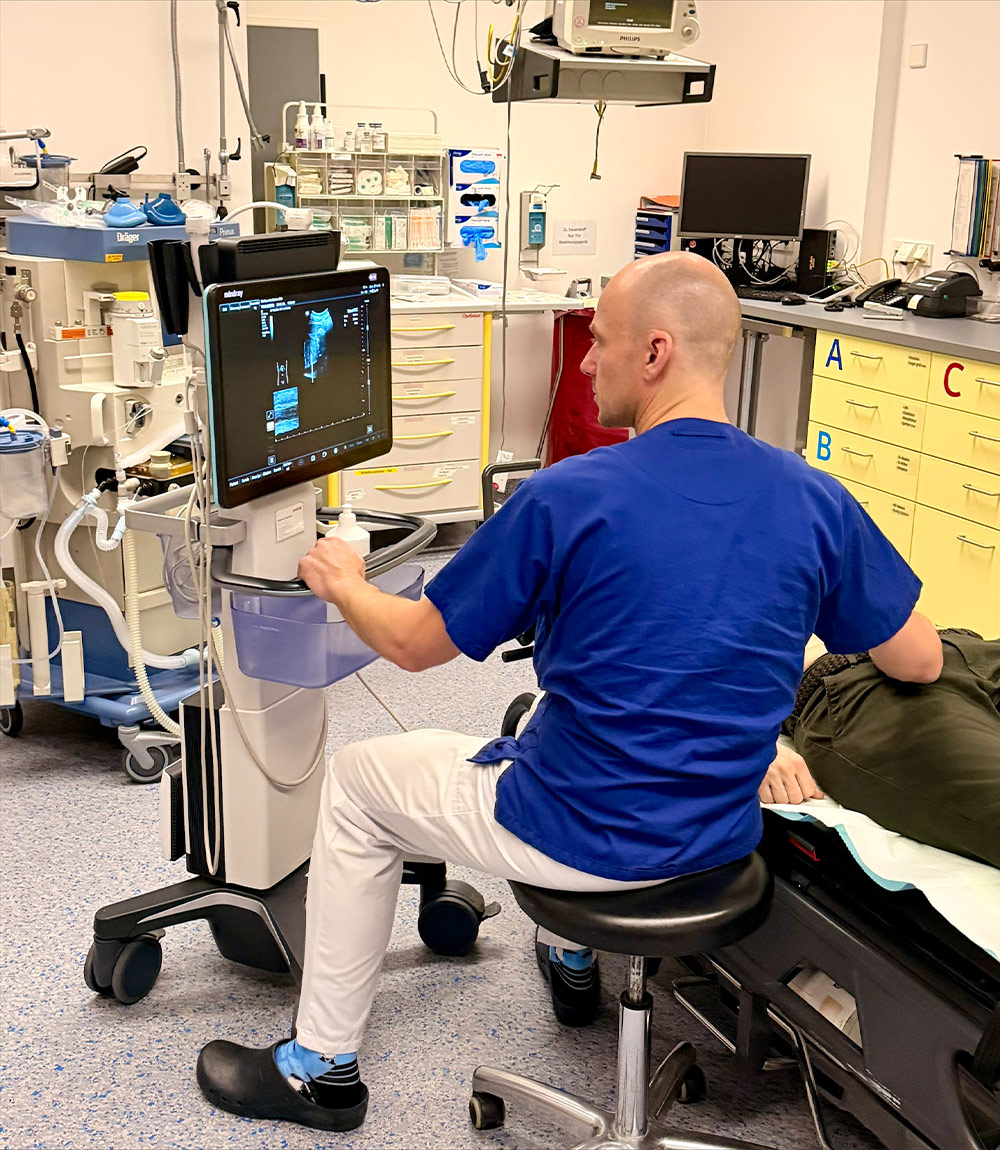
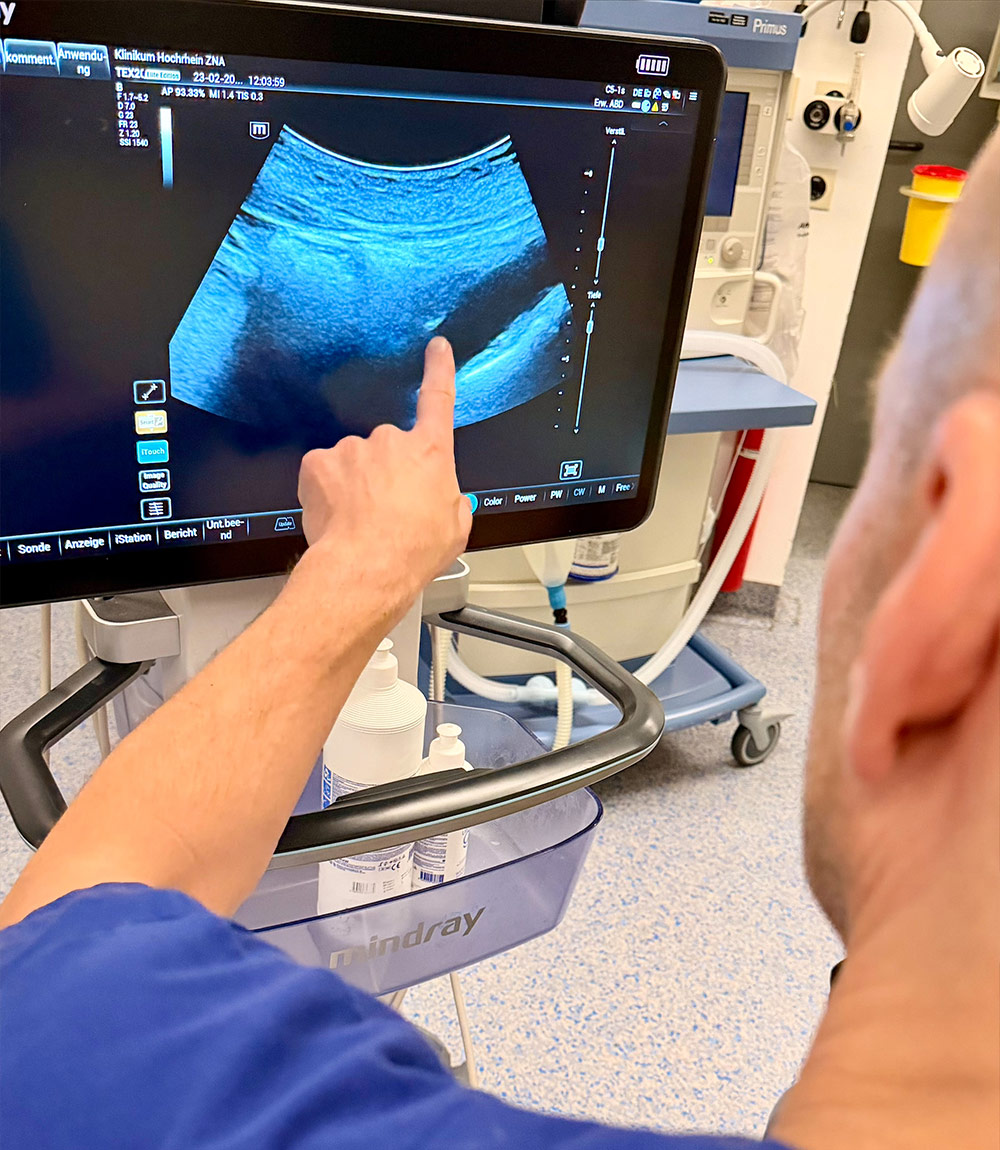
In complex emergency situations, doctors are often challenged not by a lack of clinical knowledge, but by the overwhelming chaos of the environment—which is precisely where standardized protocols like RUSH and eFAST prove invaluable. As a workflow automation tool, TEX20 iWorks significantly accelerates routine assessments through preset protocols, enabling automatic recognition of cross-sections and measurement of key parameters. This empowers even less experienced physicians to make fast, informed decisions grounded in reliable diagnostic data.
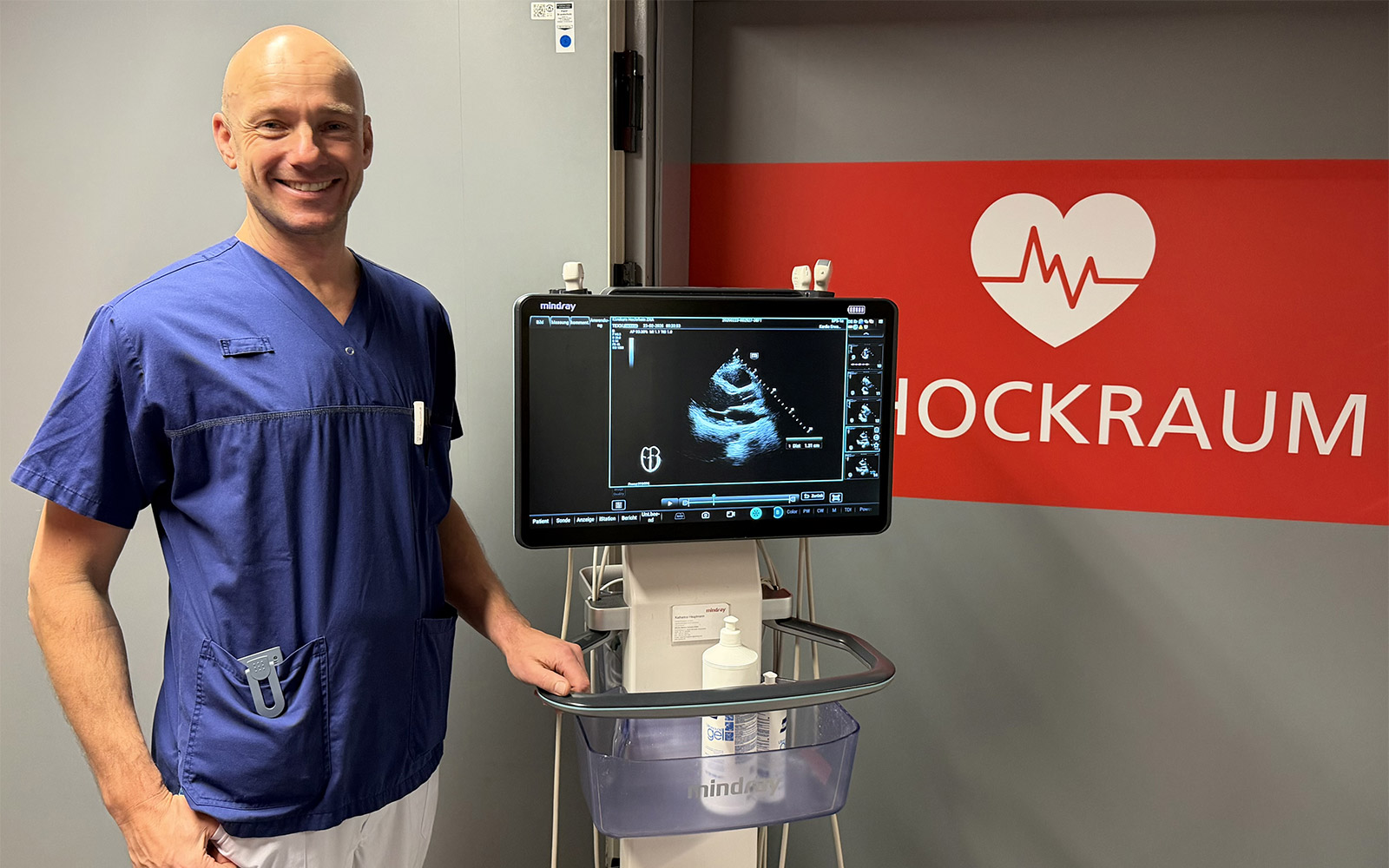
Like the ballpoint pen Dr. Schmitz describes, the TEX20 proves that in emergency medicine, the most essential tools aren't the most complex—they're the ones ready when you need them, and reliable when it matters most.
Source link: https://healthcare-in-europe.com/de/news/mindray-tex20-ultraschall-notaufnahme.html