In partnership with Mindray, Weifang People’s Hospital has launched the Weifang Smart Emergency, an Emergency Medical Services (EMS) platform that seamlessly integrates 5G network, medical devices and ambulances into a unified response system, leading to a new paradigm of the “hospital-on-the-go” workflow.
“The handover time for critically ill patients has been reduced by an average of 10 minutes!”
In acute myocardial infarction (AMI) cases, the critical treatment window is only 60 minutes, so every second counts. Each minute of earlier intervention increases the hope of survival. Reducing handover time by 10 minutes translates directly into greater survival odds and better recovery potentials for patients.
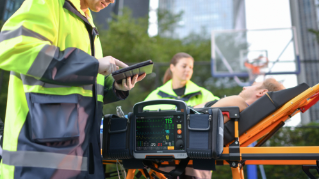
The Weifang Smart Emergency system connects medical devices across the continuum—from the scene to the hospital. This transformation of ambulances into smart hubs, coupled with 5G-based remote vital signs transmitting, monitoring and diagnosis, effectively dismantles the silos between pre-hospital and in-hospital systems. Ultimately, it delivers a higher standard of faster, more effective emergency care.



Weifang, Shandong


Over 50
Ambulance Dispatches Daily


Over 3,000
Critically Ill Patients Annually


11
5G Ambulances Equipped
Over 18,000
Ambulance Dispatches Annually


Citywide Coverage
Regional Reach
Emergency Care Solution by Mindray
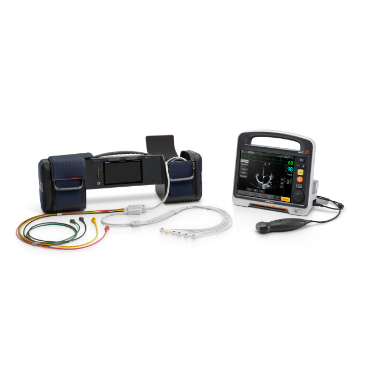
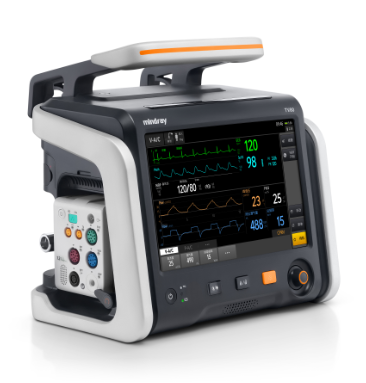
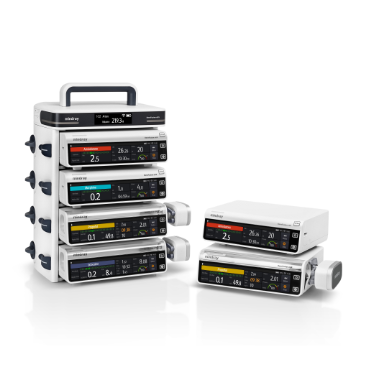
Mindray's Emergency Care Solution seamlessly bridges every critical phase—from pre-hospital rescue and ambulance transport to ER treatment and in-hospital handover. By integrating information management systems with key devices such as DX defibrillator/monitors, TV80 transport ventilators, and M-Connect IT solution, it empowers clinicians across the entire continuum of emergency care while ensuring complete data integrity and continuity.
Prof. Yuehong Cai
Deputy Director, Weifang People’s Hospital
Emergency care is a distinct medical discipline that serves a critical role in the entire chain of pre-hospital actions. Early intervention by the emergency team has a direct impact on patient outcomes. Only by improving the emergency care of each hospital can patients’ benefits be truly achieved.
Through the Weifang Smart Emergency platform, patient vital signs (respiration, blood pressure, heart rate, SpO₂), ECG reports, and point-of-care ultrasound (POCUS) images are transmitted in real time to the hospital. This live data enables physicians in the dispatch center to perform real-time assessment and provide remote guidance, and even convene an MDT for complex cases. Simultaneously, the in-hospital emergency team will be prepared in advance. This data-first approach proactively ensures an early medical intervention as well as a seamless and efficient handover.
This transformation represents more than just streamlined workflows and reduced handover times. The comprehensive, streaming physiological data enables accurate identification of potential risk factors, providing dual-assessment support that significantly lowers rates of missed and misdiagnosis, thereby increasing the success rate of emergency interventions.
Prof. Limei Zhao
Director of Pre-hospital Care, Emergency Department
Weifang People’s Hospital
The value of remote ECG is evident in such a case that on-scene physicians might find nothing remarkable regarding the ECG of a chest-pain patient with a history of hypertension and diabetes. However, a cardiologist at the hospital could identify subtle, critical signs. This allows for an instant guidance on medication administration, leading to a timely and appropriate treatment for the patient.
Clinical Case
A senior with chest pain was transported via EMS. The pre-hospital ECG was initially interpreted as normal; however, the remote cardiologist found ST Elevation in Leads II, III, and aVF, who suspected an acute MI. Guided treatment (ticagrelor, aspirin, O₂, IV access) was started right away and the catheterization lab was alerted to be prepared. Upon hospital arrival, the patient was taken directly to the catheterization lab within 3 minutes and was discharged on day 5.

Binbin Ju
EMS Physician, Emergency Department
Weifang People’s Hospital
This has tightened up our pre-hospital workflow, making it more detailed and systematic. The remote team serves as a vital second layer of oversight, catching what I might miss and advising on uncertain calls. It helps alleviate some of the families' concerns as well.
5G-integrated Ambulances, A Paradigm Shift of Emergency Care
The smart emergency care of 5G-integrated ambulances marks a paradigm shift for Weifang People’s Hospital. It turns the traditional “blind spot” of emergency care into a visible, diagnosable and actionable realm, which not only standardizes the clinical practice of ambulance teams, but empowers them to work with greater composure and confidence, allowing a renewed focus on patients. This lays a solid foundation for significantly enhancing both the quality and efficiency of emergency care.
Building on this success, Weifang People's Hospital is now replicating this model across the county and district-level hospitals. This shifts the goal from improving just one hospital's capabilities to enabling a homogeneous, elevated standard of emergency care for the entire area.
Saving lives is why we innovate. At Mindray, we see smart technology not as cold hardware, but as a vital answer to the urgency of care. Partnering with emergency teams, we integrate intelligence into every link of the pre-hospital chain, giving physicians the power to see more, do more, and care more for patients. We envision every ambulance as a lifeline of both data and humanity, making the journey of emergency care more efficient, more hopeful, and more humane.