From Madagascar to the World: How One Ultrasound School Is Rewriting the Health Future of 30 Million People

With only 0.17 physicians per 1,000 people, Madagascar faces a severe shortage of healthcare professionals. By comparison, China has 3.61 physicians per 1,000 people. This imbalance in medical resources reflects a growing global challenge. As Madagascar’s largest public teaching hospital, HJRA (Joseph Ravoahangy Andrianavalona University Hospital) carries some of the country’s greatest healthcare responsibilities. In 2026, HJRA partnered with Mindray to establish the country's first M-Ultrasound School, using medical imaging as a starting point to help reshape healthcare access for Madagascar’s 30 million people.


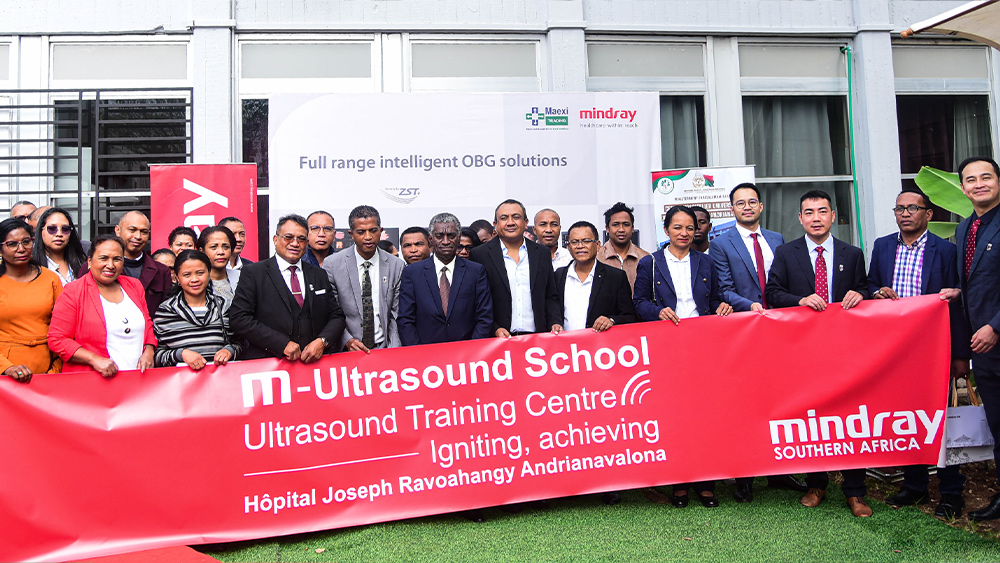
The Launching Ceremony of M-Ultrasound School
The inauguration ceremony brought together key healthcare leaders, including Dr. Ephraïm Stéphanson Randrianambinina, Secretary General of the Ministry of Public Health, Dr. Tombofeno Vagnono Jorondraza Jean Marc, Director General of Healthcare Service Delivery (DGFS), Dr. RAKOTONAIVO Mamisoa Judicaël, Director of HJRA and Dr. Rajaonarison Ny Ony, Head of the Imaging Center. Together, they witnessed a landmark step toward strengthening healthcare capacity in Madagascar.
“This project is essential to improving healthcare quality in Madagascar. In the past, many patients had to leave our hospital—or even the country—to access certain specialist examinations,” said Dr. Rajaonarison Ny Ony.
Bridging the Gap:
Starting with Ultrasound
According to a 2023 World Bank report, 80.3% of Madagascar’s population lives below the poverty line, while only 8% have health insurance coverage. The country faces critical shortages in both healthcare personnel and medical infrastructure.
Outside the capital, Antananarivo, access to CT and MRI systems remains extremely limited. As a result, ultrasound has become one of the most important imaging tools in primary healthcare settings, thanks to its affordability, portability, and non-invasive nature.
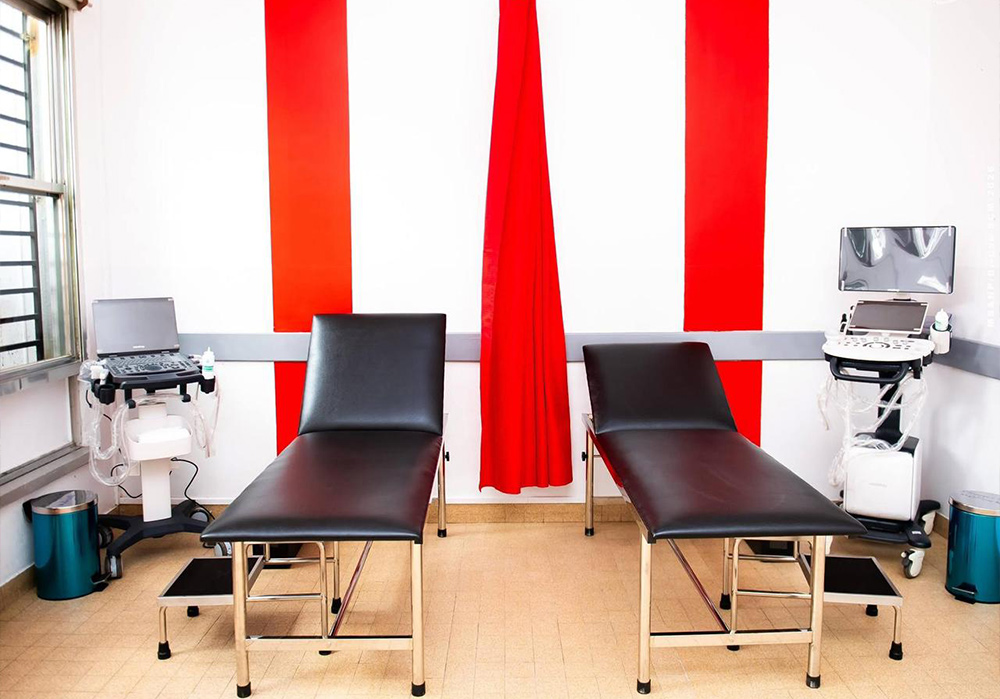
In HJRA hospital,
the MX3 and Consona N6 series device are installed
Mindray’s MX3 portable ultrasound system, currently used at HJRA, weighs less than 4 kg and offers all-day battery support alongside a 15.6-inch high-definition display. Its portability and resilience make it particularly suitable for environments with unstable power supply, ensuring continuity of patient care.
HJRA’s decision to partner with Mindray was also built on long-standing trust. The hospital has been using Mindray laboratory equipment for nearly two decades, with some systems still operating reliably today. “This is the best proof of the reliability and durability of Mindray equipment,” said Dr. RAKOTONAIVO.
Addressing the Next Challenge:
When Education Forms Up the Future
While equipment availability is a critical first step, another challenge quickly emerged: the shortage of trained professionals capable of using it effectively.
Madagascar’s healthcare system is structured across four levels—from national policymaking to community-based healthcare delivery. Yet even with improved access to ultrasound equipment, limited expertise continues to constrain healthcare services.
Research has shown that structured ultrasound training programs can significantly improve ultrasound competency among healthcare workers in low- and middle-income countries.[1]。
This is one of the key reasons HJRA and Mindray established the Ultrasound School. “As a university hospital, HJRA has three core missions: specialist training, delivering healthcare to the highest scientific standards, and conducting medical research. The Mindray Ultrasound School strengthens all three,” said Dr. RAKOTONAIVO.
The school provides both medical students and practicing clinicians with hands-on training opportunities using advanced ultrasound systems. Equipped with Mindray’s iScanHelper intelligent learning platform, trainees can accelerate skill acquisition through interactive guidance and practical scanning exercises.
Dr. Rajaonarison Ny Ony
Head of the Imaging Center, HJRA Hospital
This training center represents a major opportunity for both students and healthcare professionals, giving them direct access to training on state-of-the-art equipment,
Building Capacity
Expanding Care
After completing training, graduates will return to their hospitals and communities, helping expand access to ultrasound services across the country—particularly in maternal and child healthcare.
According to a joint report released by the World Health Organization, the World Bank, and other international organizations in April 2025, Madagascar recorded 445 maternal deaths per 100,000 live births in 2023. Wider access to advanced ultrasound technologies, including 3D imaging, can help clinicians identify high-risk pregnancies earlier, enabling timely intervention and improving maternal and neonatal outcomes.
For many healthcare providers in Madagascar, learning to perform a 3D fetal examination is more than mastering a technical skill—it is gaining the ability to change lives.
In clinical practice, Mindray’s iWorks intelligent workflow further supports users by standardizing scanning procedures and helping clinicians acquire high-quality diagnostic images more efficiently.
HJRA’s ambitions extend far beyond a single training center. “The ultrasound training center is part of a carefully planned long-term vision. Our goal is to equip every department with its own ultrasound system, allowing examinations to be performed directly within clinical departments rather than through a centralized imaging service. This will reduce delays, accelerate diagnosis, and ultimately improve patient care,” said Dr. Rajaonarison Ny Ony.
Starting from the existing training framework at the University of Antananarivo, this model is expected to expand nationwide. By strengthening workforce capabilities and improving local service capacity, Madagascar aims to bring quality healthcare closer to its people.
For Mindray, initiatives such as the Madagascar Ultrasound School are an important component of its global Project 2030 educational program. Through ultrasound education and capacity building, the company seeks to expand access to essential healthcare services in underserved regions.
Today, Mindray has partnered with healthcare institutions worldwide to establish more than 70 Ultrasound Schools. By 2030, the company plans to grow that network to 150 schools, providing ultrasound education to over 50,000 healthcare professionals globally.
Reference:
[1] Eppel F, Hunstig F, Bélard S, Kreuels B. Concepts for point-of-care ultrasound training in low resource settings: a scoping review. Ultrasound J. 2025 May 15;17(1):24. doi: 10.1186/s13089-025-00427-3. PMID: 40372568; PMCID: PMC12081813.