The Importance of Continuous Monitoring in Critical Care Settings
12-02-2025
Continuous patient monitoring plays in improving patient outcomes. This blog covers:
Continuous patient monitoring supports early detection of clinical deterioration through automated Early Warning Scores that track multiple parameters and alert clinicians when thresholds are exceeded. A 2023 study found average-sized U.S. hospitals can save over $6 million yearly by preventing ICU transfers through continuous monitoring in Medical-Surgical Units. Mindray's patient monitoring solutions feature wireless connectivity, user-friendly interfaces, and intelligent alarm management with customizable threshold settings.
Continuous monitoring in Intensive Care Units (ICUs), Emergency Departments (EDs), Operating Rooms (ORs), and other high acuity settings is necessary to protect patient health. By continually monitoring vital signs in the ICU, clinicians can detect changes in a patient's condition early and initiate lifesaving interventions.
Depending on a patient's condition, clinicians may also need to continually monitor advanced parameters, like invasive blood pressure (IBP) and cardiac output (CO). Advanced patient monitors can connect to various modules to capture a range of parameters. Modern patient monitors often feature wireless connectivity, user-friendly interfaces, and predictive analytics enabling enhanced patient care and streamlined workflows.
With patient acuity increasing nationwide, many healthcare organizations are focusing on acquiring better technology to deliver quality patient care. For example, according to a 2024 McKinsey and Company survey, 90% of health system executives report that their organizations are prioritizing digital transformation. Patient monitors are an integral part of this change.
If your hospital has an initiative to adopt new technology, consider whether your patient monitors need an upgrade to support efficient continuous monitoring. Here are the advantages of continuous patient monitoring with advanced solutions in critical care settings.

When clinicians can detect deterioration before it becomes a life-threatening event, they can initiate treatment that helps patients recover. This, in turn, shortens the patient's length of stay, increases bed availability, and reduces the strain on resources.
Although continuous monitoring is needed when managing critically ill patients, hospitals may also consider implementing it in Medical-Surgical Units to detect deterioration early in high-risk patients and thereby conserve resources. Continuously monitoring low or mid acuity patients can prevent ICU transfers, saving resources and reducing costs.
A 2023 study found that the average-sized U.S. hospital can potentially save over $6 million yearly by improving patient outcomes resulting from continuous monitoring in Medical-Surgical Units. The study also found that the largest cost savings come from preventing transfers to the ICU.
3. Improves Clinical Workflows and Increases Efficiency
Advanced patient monitors can help clinicians save time when caring for critically ill patients by reducing manual work. These solutions automatically capture a continuous stream of data, preventing the need for manual spot checks. They also feed patient data directly into the electronic medical record (EMR), so healthcare professionals do not have to manually enter data.
Some of the industry's modern transport monitors are particularly helpful in streamlining continuous monitoring. With wireless connectivity and modular designs, transport monitors keep clinicians from spending time disconnecting and reconnecting cables and sensors. Instead, these monitors dock into the bedside monitor and then attach to the bedrail during transport.
Lastly, advanced patient monitors offer a comprehensive view of parameters at a glance. Clinicians can quickly assess patients' conditions and form a complete picture of their health.
4. Facilitates Informed Clinical Decision Making
Decision making in high acuity settings is a complex task. If done without a complete understanding of a patient's health, it can lead to adverse events. Continuous monitoring provides a constant flow of comprehensive, real-time data, enabling clinicians to make informed decisions efficiently and ensure that resources are available for the most critically ill patients.
Since continuous monitoring generates a massive amount of data, monitors must present information in digestible formats. Advanced patient monitors offer enhanced visualization features, like customizable layouts, color-coded parameters, and multiple waveforms per screen to help clinicians interpret data quickly. Meanwhile, multi-gesture capacitive touchscreens simplify device navigation.
5. Offers Improved Alarm Management to Reduce Alarm Fatigue
The number of medical devices with alarms has quadrupled over the past 30 years. Up to 90% of the alarms that healthcare professionals are exposed to are false and do not reflect a patient's true condition. Because healthcare personnel may hear up to 1,000 alarms during a single shift, they can become desensitized to the sound, a condition called alarm fatigue. Alarm fatigue increases the likelihood that clinicians will overlook a critical alarm.
Alarms are an essential part of continuous monitoring and timely interventions. Modern monitoring solutions enable healthcare teams to manage alarms more effectively, which can reduce false alarms and alarm fatigue. For example, clinicians can configure alarm thresholds within patient monitors based on individual patient needs.
Some solutions integrate intelligent alarms. Mindray North America's BeneVision N-Series Patient Monitors utilize iAlarm technology to reduce false alarms. This technology cross-references multiple parameters to identify true physiological changes, triggering alarms only based on personalized threshold settings.

Mindray develops innovative patient monitors for various acuity levels with clinician workflow and patient outcomes in mind. Our solutions feature intuitive interfaces, configurable parameters, and modular designs to help healthcare teams spend less time interacting with devices and more time focusing on patient care.
Our continual investment in research and development allows us to deliver leading-edge medical technology to our healthcare partners, empowering them to make informed decisions quickly in critical care settings.
Transform Clinical Workflows With Mindray
With patient monitoring technology evolving and becoming more intuitive and intelligent, clinicians can expect continuous monitoring processes to transform. Adopting advanced patient monitors enables hospitals to stay at the forefront of innovation and deliver high-quality care to patients requiring continuous monitoring.
If your hospital wants to implement advanced patient monitors in your ICU, OR, ED, or Post-Anesthesia Care Unit (PACU), consider the BeneVision N-Series — our high acuity patient monitors. Our N-Series Monitors offer extensive customization capabilities and user-centric designs, ideal for busy critical care environments.
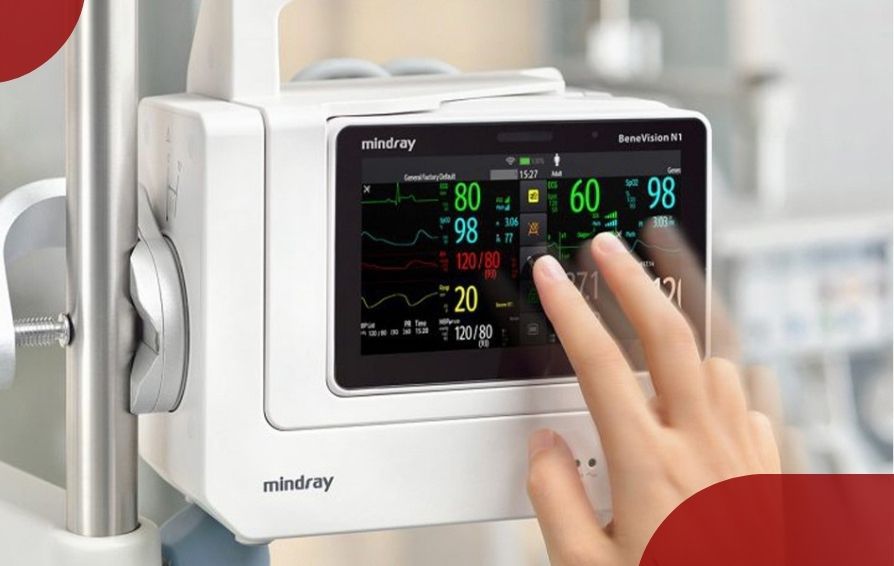
The BeneVision N1 Monitor/Module is well-suited for continuous monitoring of critically ill patients needing intrahospital transport. With its compact, modular design and wireless connectivity, the N1 Monitor enables efficient continuous monitoring during patient transport.
Ready to learn more about our patient monitor solutions? Contact Mindray today to schedule a demo or obtain pricing information.