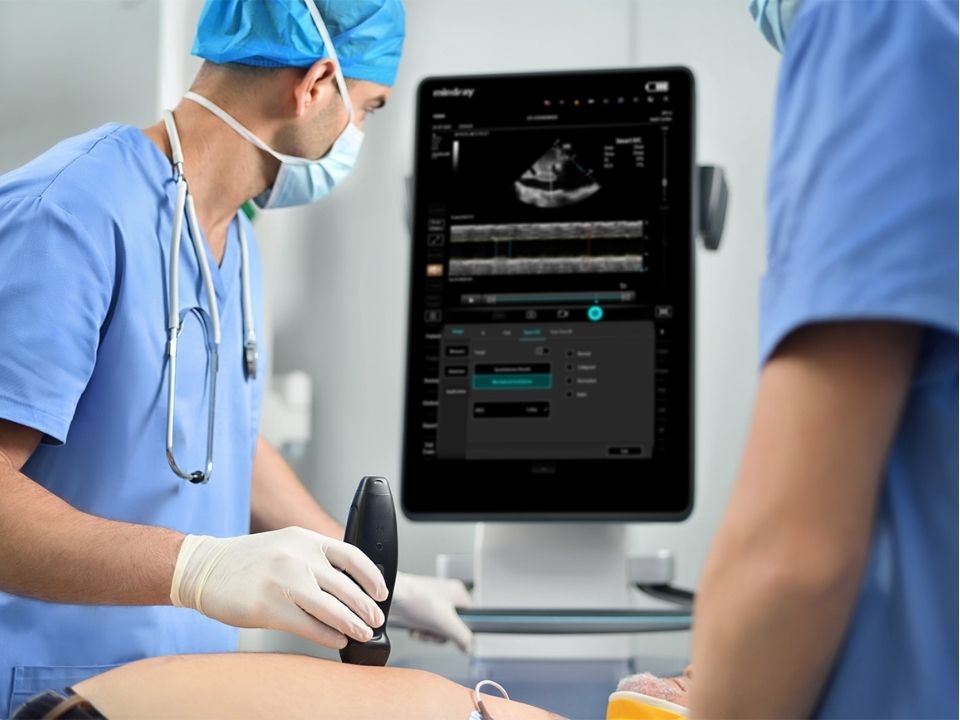
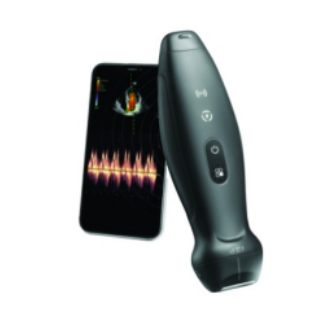
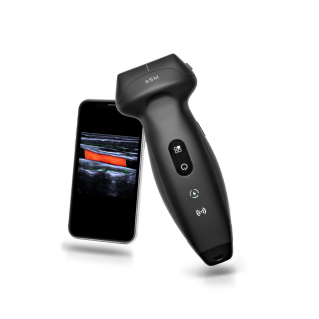
Handheld ultrasound devices bring real-time imaging directly to the bedside in a pocket-sized form factor, enabling faster clinical decisions across emergency medicine, critical care, primary care, and pre-hospital settings. Lower cost and improved ergonomics increase accessibility, though proper training remains critically important. Mindray's TE Air Wireless Handheld Ultrasound combines portability with evolving AI capabilities to support efficient point of care diagnostics.
What Is Handheld Ultrasound?
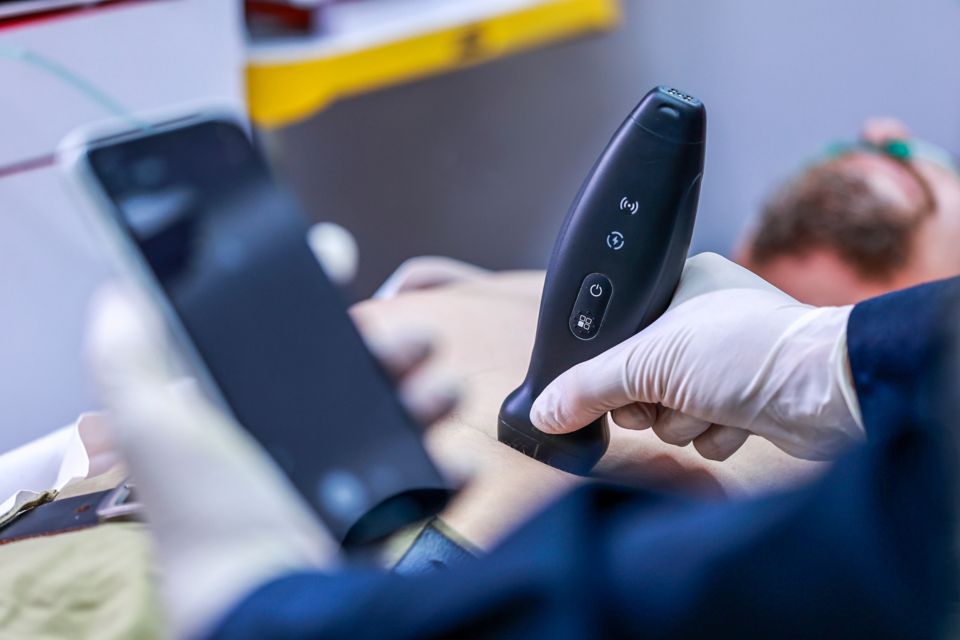
Handheld ultrasound is a small, portable device that connects to a mobile device or larger ultrasound machine. It gives clinicians real-time images at the patient's bedside. These devices can fit in a clinician's pocket, making them easy to carry and capture patient images on the go.

Benefits of Handheld Ultrasound in Point of Care Settings
The size and functionality of handheld ultrasound devices offer many benefits to clinicians. Some of these include:
1. Enhanced Accessibility and User-Friendliness
Handheld ultrasound devices can connect to a mobile device or another ultrasound system, making it easy for clinicians to take them almost anywhere. In a healthcare facility, clinicians can keep up with various departmental needs by scanning patients directly where they are. This removes the need to transfer patients or locate a larger portable ultrasound solution to bring to their bedside.
Handheld ultrasound systems are also user-friendly and typically require limited training time for physicians, which can lead to faster deployment.
2. Improved Ergonomics
Ergonomics is one of the key benefits of handheld ultrasound devices. A wireless ultrasound system eliminates the worry about wires or tight spaces between the patient and the machine. Clinicians can avoid contorting their bodies around larger ultrasound systems to scan patients, allowing them to perform exams with greater ergonomic balance and comfort.
3. Quick Assessment and Diagnosis
Clinicians do not have to wait for results from the radiology department to make a diagnosis and initiate treatment. With handheld ultrasounds, they can assess and diagnose patients quickly right at the point of care, whether at the bedside, in an ambulance, or in the field. This allows clinicians to make decisions in critical situations rapidly.
4. Improved Patient Care and Satisfaction
Since handheld ultrasound enables rapid diagnosis at the bedside, it also promotes higher quality care by minimizing treatment delays and supporting greater diagnostic and procedural precision. POCUS has been shown to improve diagnostic accuracy at the point of care, reduce complications, and decrease diagnostic testing. It can also improve patient satisfaction, since patients no longer have to travel to imaging centers for scans.
5. Lower Cost of Ownership
Compared to larger standard ultrasound machines, handhelds provide a much lower-cost option to clinicians. This can translate to more ultrasound solutions across numerous departments in a large healthcare facility. In contrast, traditional ultrasound systems require a larger long-term investment.
Applications of Handheld Ultrasound in Point of Care Settings
Healthcare providers use portable ultrasound machines in various care settings. They allow clinicians from different fields to take real-time images of their patients quickly. Some examples of applications include:
- Emergency medicine: Using handheld ultrasound systems in emergency settings can be potentially lifesaving to trauma patients. Clinicians can quickly perform exams with handheld devices and evaluate acute conditions requiring immediate intervention
- Critical care: In critical care settings, handheld devices allow for a real-time assessment of cardiac function, fluid management, and evaluation of lungs while also providing procedural guidance for IVs, central lines, and ECMO cannulation
- Primary care: Handheld ultrasound systems make it easier for primary care physicians to evaluate cardiac function and perform fetal checks without sending patients out for imaging elsewhere. Primary care physicians can also use a handheld ultrasound to screen for renal/bladder status
- Obstetrics and gynecology: In the OB/GYN office, fetal health checks and fetal positioning can be captured accurately with handhelds, enabling clinicians to assess the fetus more quickly
- Musculoskeletal: Handheld ultrasound is optimal for scanning for musculoskeletal injuries and procedural guidance for aspirations and pain injections
- EMS or pre-hospital: EMS workers can use handheld devices to quickly check for serious conditions while transporting patients to the emergency room. This benefits the patient and helps save time, allowing emergency medicine doctors to start treatment sooner
Challenges and Limitations of Handheld Ultrasound for Healthcare Facilities
Handheld ultrasound is beneficial for clinicians and patients. However, important considerations should be taken before using it for diagnosis:
- User skills and training: When using handheld or traditional ultrasound systems, clinicians must be trained to use proper scanning techniques and interpret images. Imaging with handheld ultrasound requires additional training, as the risk of overuse can lead to incidental findings. Ensuring that physicians are trained only to scan when necessary helps to mitigate false findings from newer and less experienced clinicians
- Limited scope of imaging: Handheld ultrasound machines generally do not offer the same image quality as larger systems or advanced echo applications. However, with some modern devices integrating advanced features, like spectral Doppler capabilities, handheld ultrasound has potential for both qualitative and quantitative analysis
- Disinfection concerns: Ultrasound devices require rigorous disinfection between patients, like their larger counterparts. However, clinicians can easily cover handhelds with sterile sheaths during use to significantly reduce the risk of cross-contamination and the spread of infectious diseases between patients. Please refer to your manufacturer’s IFUs for approved cleaning methods and disinfectants
- Technical limitations: Handheld ultrasound devices offer many benefits, but it’s important to consider potential technical limitations. One important factor is battery life. These devices use rechargeable batteries that can last through multiple exams. However, they may not last all day, depending on usage. Planning for battery recharging can be crucial in busy settings
The Future of Handheld Ultrasound
Handheld ultrasound will likely increase in POCUS environments because they are affordable, portable, and support high-quality patient care. Additionally, the technology behind these devices and the mobile apps supporting them will likely continue to evolve and lead to improved image quality. Advancements such as AI programs are presently helping to enhance image functionalities and capabilities.
Healthcare facilities may also expect future innovations in the realm of wearable ultrasound technology. For instance, researchers are exploring smart glasses with POCUS integration. These devices can adjust an ultrasound machine's settings based on eye movements. According to emerging research, smart glasses also have potential to enable image viewing directly in the visual field, reducing head movements during procedures.