Enhancing Patient Care through Smart Connectivity and Device Integration
2025-12-09

Imagine a hospital where clinicians make split-second decisions with confidence, where monitors, devices and clinical systems speak the same digital language, and patient care is propelled to new heights through seamless information-sharing. These aspirations are becoming a reality at Royal London Hospital and Liverpool Heart & Chest Hospital in the UK. By embracing smart connectivity and cutting-edge technology from Mindray, these leading institutions are redefining how data powers healthcare while ensuring that every moment at the bedside is focused on what matters most: the patient.
A Leap Forwards in Efficiency: Royal London
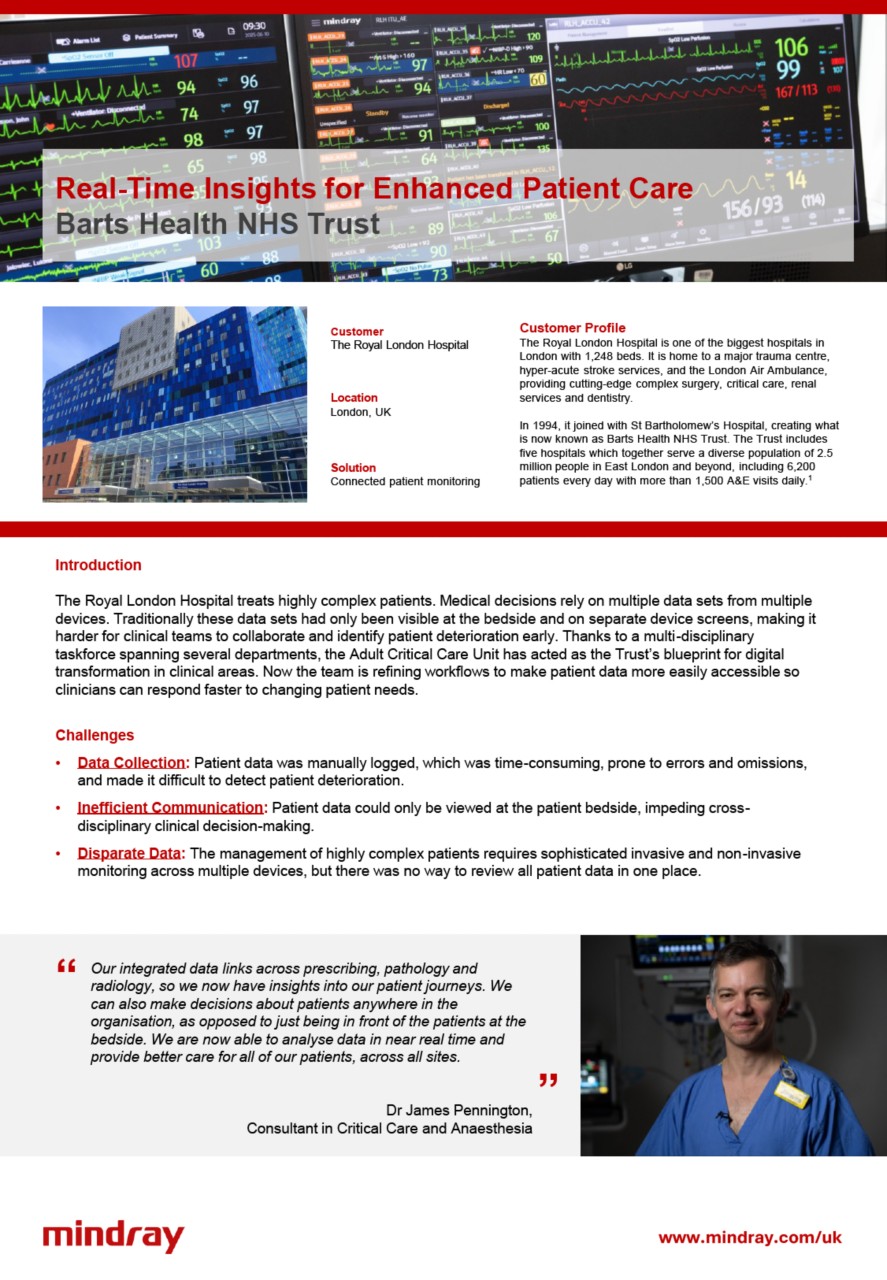
The Adult Critical Care Unit (ACCU) at Royal London cares for patients with highly complex needs, requiring advanced monitoring from a wide range of devices. Before digital integration, this critical information was visible only at each patient’s bedside, which delayed team responses and made proactive care more difficult. Valuable nursing time was often spent manually transcribing device data which not only risked human error but also reduced the quality time they could spend with patients.
Recognizing the need for change, the team set out to overhaul their workflow, determined to respond faster and more effectively to patients’ conditions.
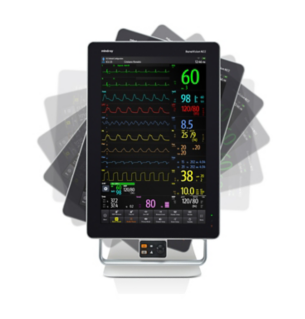
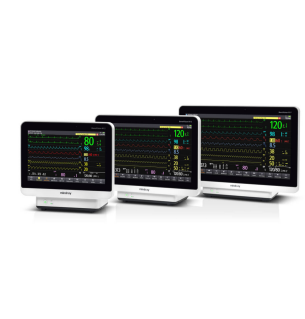
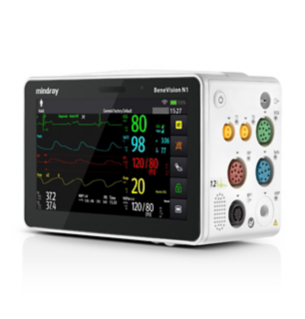
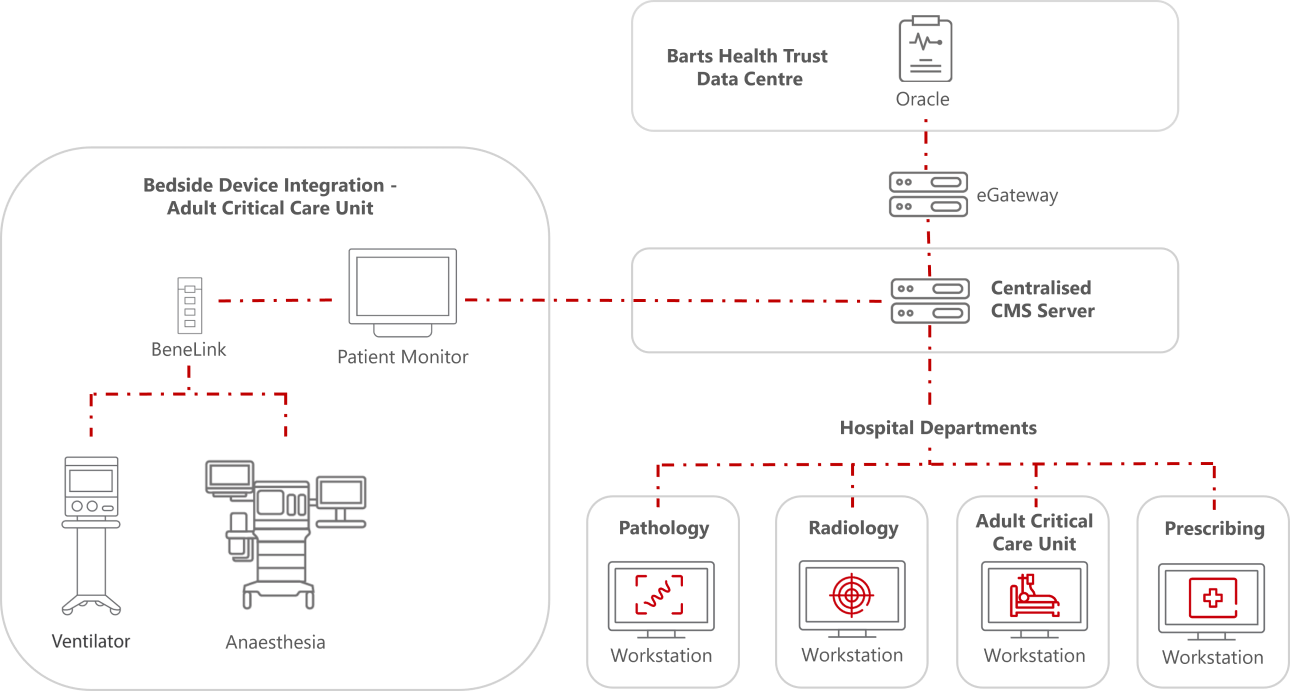
Working with Mindray, the ACCU team can now view data from multiple devices on the BeneVision N Series patient monitors at the bedside so they can quickly understand a patient’s status. Mindray devices can be linked to the monitor via the central monitoring system, and third-party devices via BeneLink. The data is also automatically uploaded into electronic patient records where multiple departments can access up-to-date information without being physically present at the bedside. This has sped up analysis and interdisciplinary clinical decision-making.
James Pennington
Clinical Informatics Lead, Royal London Hospital & Mile End Hospital
Our integrated data links across prescribing, pathology and radiology, so we now have insights into our patient journeys. We can also make decisions about patients anywhere in the organisation, as opposed to just being in front of the patients at the bedside. We are now able to analyse data in near real time and provide better care for all of our patients, across all sites.
Munajj Islam
Senior Clinical Technologist, Royal London Hospital
The central monitoring system allows us to connect devices such as anaesthetic machines and ventilators directly to the Mindray monitor. This integration ensures that patient data is recorded automatically, reducing the chances of human error.
Vincent Peji
Senior Nurse, ICU, Royal London Hospital
It's now easier for nurses and the doctors to communicate with each other. We work in a massive unit with about 44 bed spaces, so if we have any concerns about a specific bed space, we can now relay to the doctors via a phone call and they can just look at the data there and then. They wouldn't have to go to a certain bed space, investigate, ask what's going on. It makes me more fulfilled as a nurse because I can now spend more time with my patients.
The ability to access real-time data has empowered clinicians to make informed decisions quickly, ensuring better continuity of care across healthcare teams and enhancing patient outcomes. Plans are in place to extend the number of devices that are integrated to include cardiac output monitoring, depth of anaesthesia monitors, and pump and infusion devices.


Prioritizing Patient Safety: Liverpool Heart & Chest Hospital
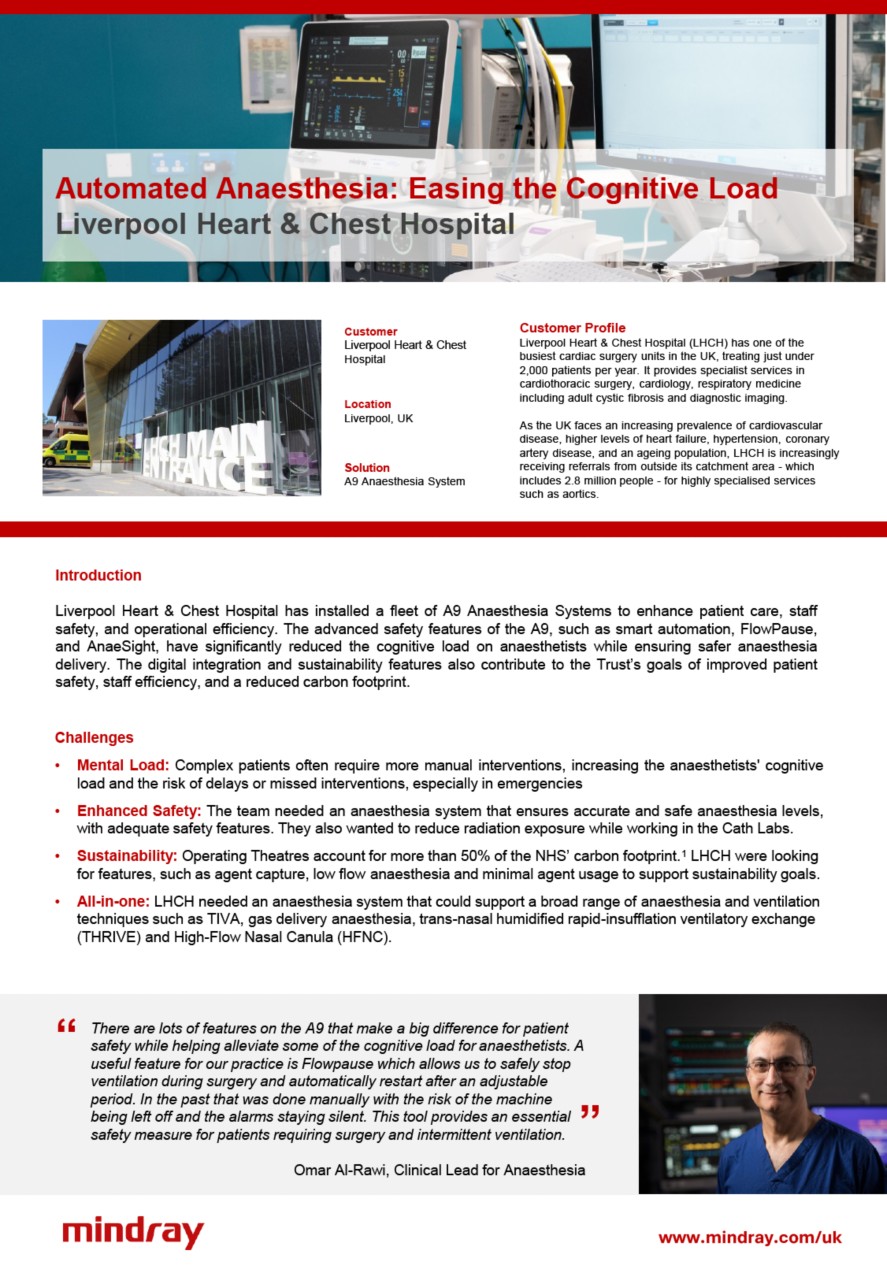
Intelligent systems that streamline workflows have also been integrated in the operating theatres of Liverpool Heart & Chest Hospital. The tertiary cardiothoracic and cardiology center is one of the busiest in the country, treating just under 2,000 patients per year.
Before the implementation of advanced connectivity solutions, anaesthetists at Liverpool Heart & Chest Hospital faced significant cognitive load during the highly complex and specialised surgeries they routinely provide. Their attention was divided between direct patient care, data logging and monitoring. More complex surgeries require more manual interventions which increases the risk of errors or delayed responses during critical moments. The team wanted a solution that would help them maintain focus, and enhance patient safety, especially when adapting to changing patient needs.
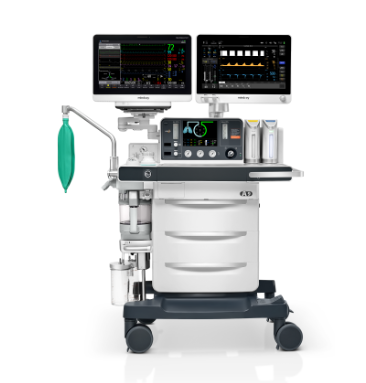
The highly-specialist anaesthesia team has embraced Mindray's smart connectivity solutions and the A9 anaesthesia system. Dr Omar Al Rawi, Clinical Lead for Anaesthesia, emphasizes the importance of integration in their high-acuity environment. "Having some form of integration with our clinical record to free up the thinking space for clinicians and give them more time to focus on delivering the service is one of our priorities,"
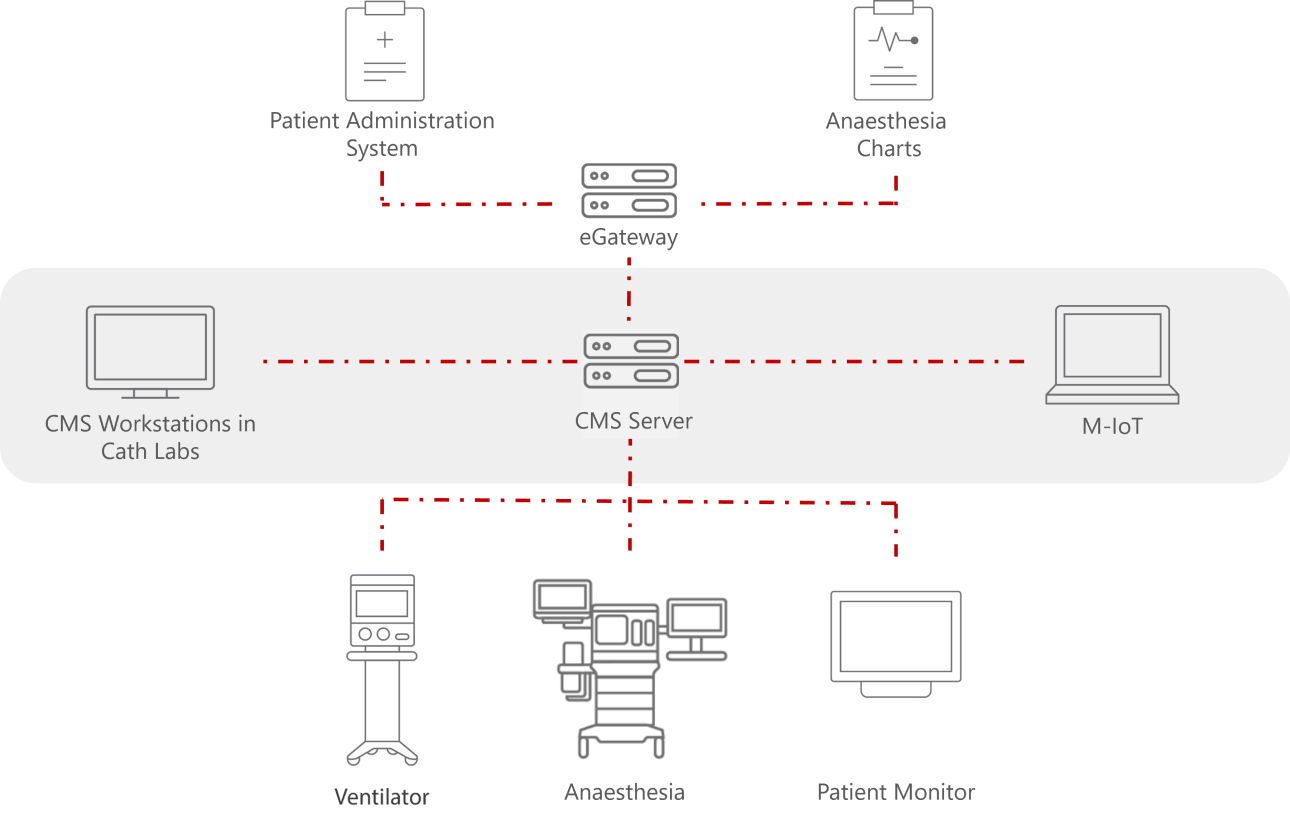
The seamless integration of the A9 anaesthetic system with their anaesthesia charting system and electronic patient records has streamlined their workflow and enhanced patient safety.
Dr Omar AlRawi
Clinical Lead for Anaesthesia, Liverpool Heart & Chest Hospital
The process of integration was straightforward and was supported by Mindray. In the morning, all we do is enter the patient's details into the machine, which links it to our electronic patient record, which starts sending data to our charting system. That helps to record with no loss of data. The A9 anaesthetic machines provide us with multiple safety features. The ability to deliver automatic controlled anaesthesia, with low flows provides us with reassurance that we're delivering accurate levels of anaesthesia for our patients. If the ventilation strategy needs to be changed during surgery this is done completely automatically. This reduces distractions during surgery and enhances patient safety.
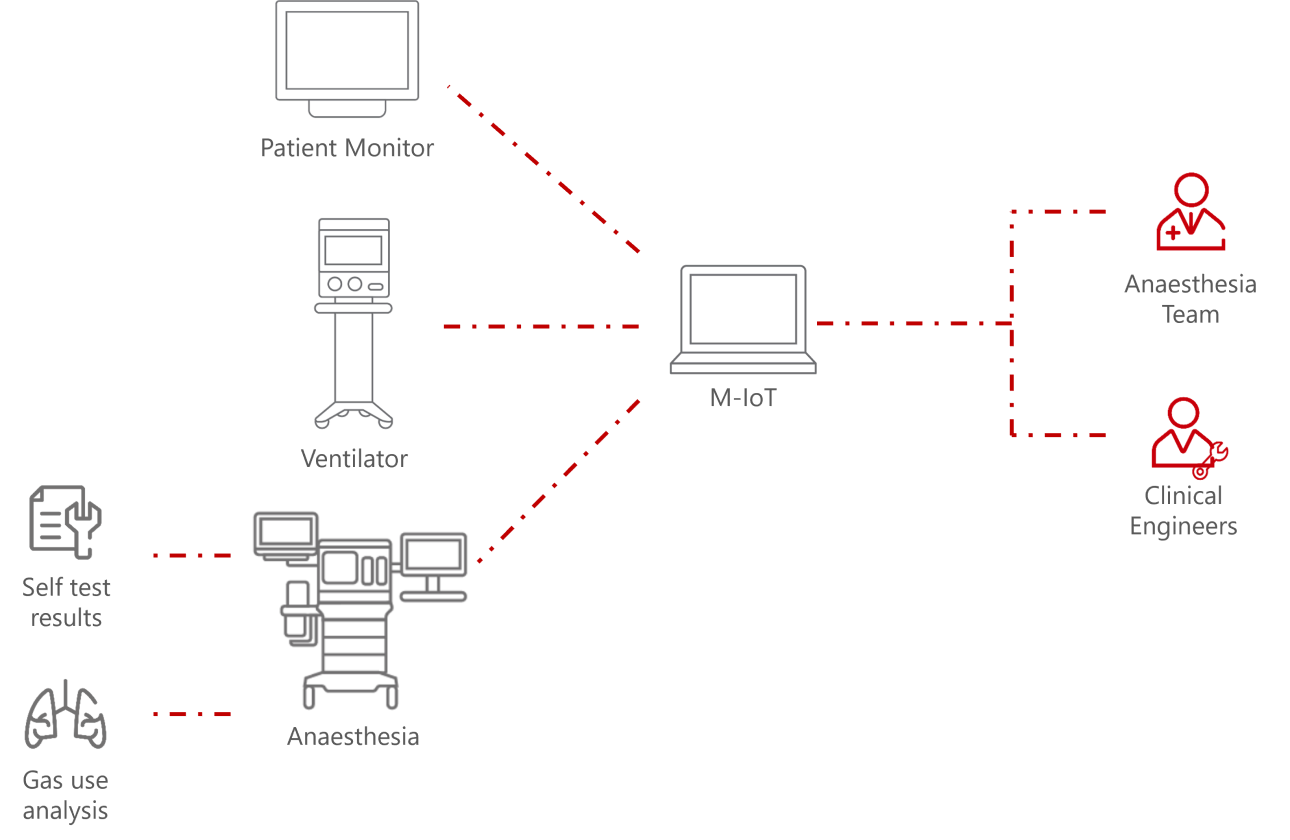
Sustainability was also a deciding factor for the team when selecting the A9 anaesthesia system. Operating theatres account for 50-70% of total hospital waste in the UK [1]. and the NHS is committed to becoming net zero by 2040, with an ambition to make an 80% reduction by 2028-2032 [2]. Dr AlRawi adds, “The M-IoT system [will] provide background information on which type of ventilatory modes and the levels of anaesthetics that we use. That can give us a general overview of the impact on the service itself, or on the environment. We could help to reduce the impact on the environment, but at the same time have a more cost-effective service.”


A Collaborative Effort for Better Healthcare
The successful implementation of Mindray's solutions at both hospitals is a testament to the collaborative efforts across departments, including clinical engineering, ICT, and medical teams.
The journey towards device integration and smart connectivity is advancing, with both hospitals planning to expand their use of these digital tools.
The integration of Mindray's smart connectivity solutions at Royal London and Liverpool Heart & Chest Hospital has brought about significant improvements in patient care and clinical workflows. By leveraging advanced technology, these institutions are setting new standards in healthcare, ensuring that clinicians can deliver exceptional care to their patients.
References:
[1] Guetter CR, Williams BJ, Slama E, et al. Greening the operating room. Am J Surg. 2018;216:683-8. Yates EF, Bowder AN, Roa L, et al. Empowering surgeons, anesthesiologists, and obstetricians to incorporate environmental sustainability in the operating room. Ann Surg. 2021;273:1108-14.
[2] p 6, Delivering a Net Zero Service National Health Service, July 2022: https://www.england.nhs.uk/greenernhs/wp-content/uploads/sites/51/2022/07/B1728-delivering-a-net-zero-nhs-july-2022.pdf