Enhancing Perioperative Surveillance at Citadelle Hospital

L'Hôpital de la Citadelle carries out 36,200 operating room interventions each year[1] across three hospital sites, making it one of the largest surgical centres among French-speaking hospitals in Belgium. Its anaesthesia teams face a constant balancing act: monitoring multiple parameters across multiple devices, tracking changes in real time, and making fast, well-informed decisions — all while remaining focused on the patient. The more fragmented that data is, the greater the mental load, and the greater the risk of a critical change going unnoticed.
Higher perioperative surveillance standards required a connected approach that could follow each patient from OR admission through to PACU discharge without any gaps. Citadelle worked with Mindray and Belgian distributor, Hospidex Innomediq, to implement an integrated monitoring ecosystem across its surgical suites. It delivers continuous clinical visibility, advanced EEG-based anaesthesia monitoring, and intelligent equipment management.
More About Citadelle
L'Hôpital de la Citadelle is one of the largest French-speaking hospitals in Belgium. It has 4,100 employees, including 600 physicians, and 900 beds across three hospital sites. The hospital carries out 36,200 operating room interventions each year, making it a major centre for surgery across a broad range of specialities. Its commitment to human-centred, excellence-driven care is reflected in a continuous drive to adopt tools that give clinicians more comprehensive and reliable insight into the patients in their care.
Closing the Gap
A Push for Integrated Perioperative Surveillance
Dr Julien Hubert
Head of Anaesthesiology, Citadelle Hospital
For us, the transition to an integrated system was quite natural. We know that standard monitoring systems are no longer fully sufficient to meet current requirements and surveillance standards. Moving to an integrated ecosystem that allows us to track information and the patient's clinical data from the beginning — from admission to the operating theatre right through to discharge from the post-anaesthesia care unit — is really something important.
The move to an integrated monitoring platform was, as Dr Julien Hubert, Head of Anaesthesiology, describes it, a natural one. The team's ambition was clear: to have reliable, continuous access to patient data at every stage of the perioperative pathway, and to bring the multiple parameters previously spread across separate devices into a single, consolidated view. Together these would reduce the mental load on anaesthetists and enable faster, more confident clinical decisions.
Deeper Insight on One Screen
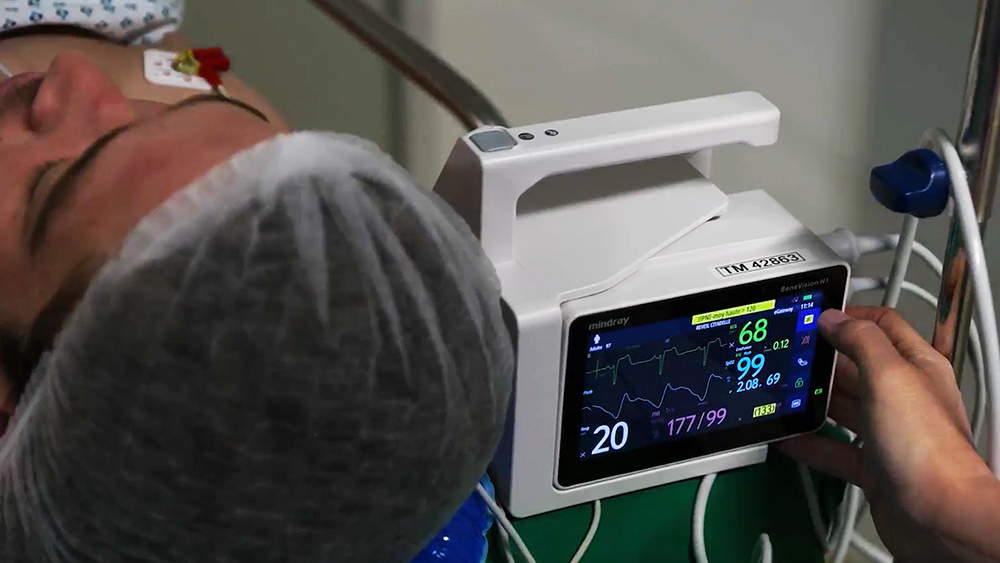
One of the new standout capabilities introduced is BIS Density Spectral Array (DSA) monitoring, integrated directly into Mindray's BeneVision patient monitors via a compact unilateral sensor.
The BIS index has long been the gold standard for assessing depth of anaesthesia, condensing complex EEG signals into a single numeric value. DSA expands on this by displaying a colour-coded spectrogram of EEG frequency power distribution over time, revealing changes in brain wave activity that a single BIS value alone may not capture.
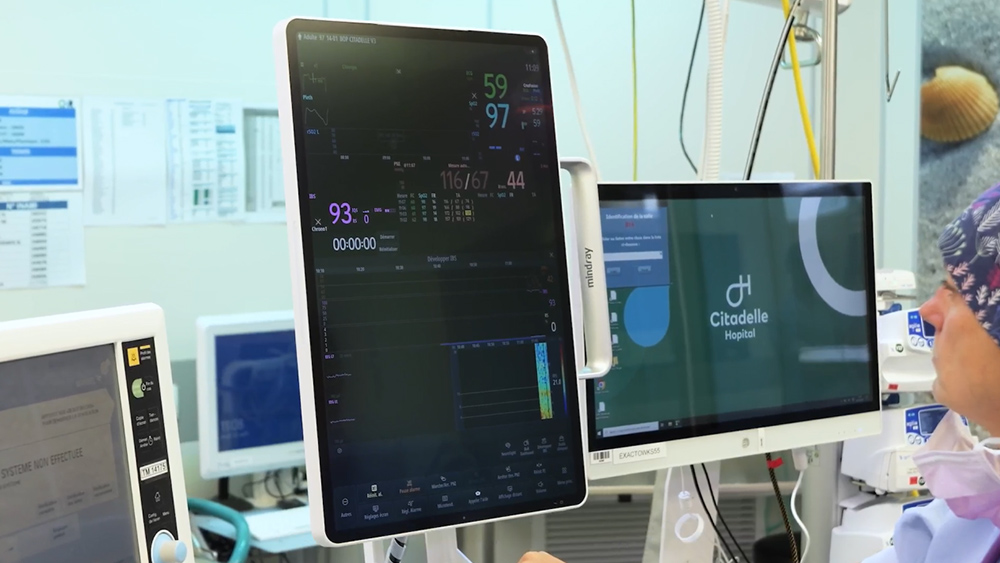
Each anaesthetic agent produces a distinct DSA pattern. By visualising these patterns in real time, anaesthesiologists can make more timely and precisely informed adjustments to drug administration. DSA also enables earlier identification of burst suppression, a recognised risk factor for postoperative delirium (POD) which affects a significant proportion of older surgical patients. Incidences range from 4% to 53% depending on procedure complexity and anaesthesia depth management is one of the recognised modifiable factors in reducing that risk[2].
The European Society of Anaesthesiology and Intensive Care Medicine (ESAIC) has updated its guidelines to support multiparametric intraoperative EEG monitoring, including BIS index, burst suppression monitoring, and DSA, as a recommended approach to reducing the risk of POD in adult patients[3].
Traditionally, DSA required a dedicated stand-alone BIS monitor, or a bilateral sensor on a patient monitor. Both add cost, complexity, and additional equipment to an already demanding clinical environment. Mindray's integration of DSA via a unilateral sensor eliminates that need, reducing consumable costs and freeing up valuable space in the operating theatre. Critically, the clinical teams at Citadelle were able to shape how that information, alongside all other monitoring parameters, was presented to them.
Pascal Troisfontaines
Head Nurse of the Operating Room
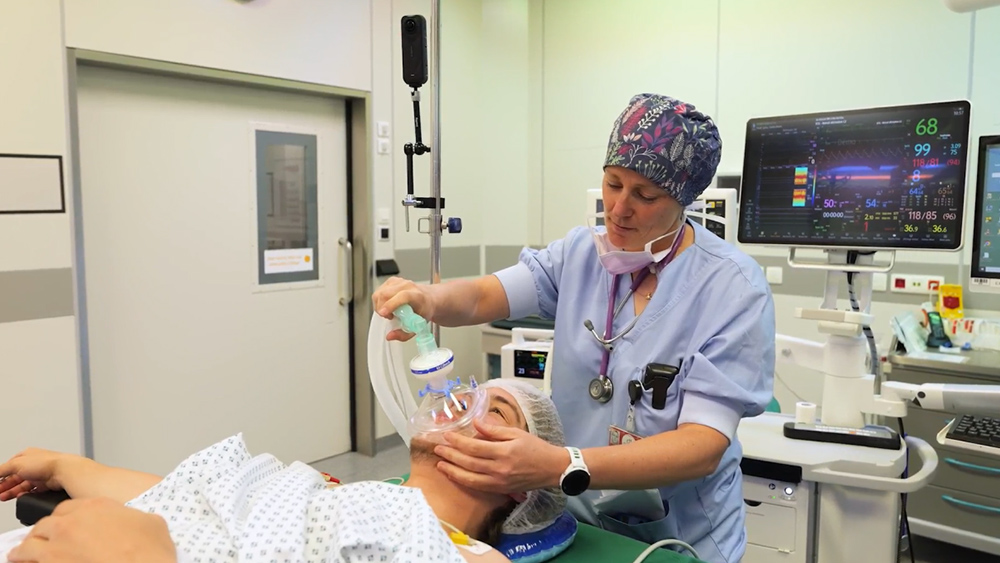
The team is very satisfied with the solution, as in terms of screen configuration, they were able to participate in defining the parameters, choose which parameters they wanted to have and see, and these parameters could be customised to the activity and working practices of our department.
A More Complete Picture of Patient Journeys
Professor Aline Defresne
Anaesthetist and Intensive Care Physician
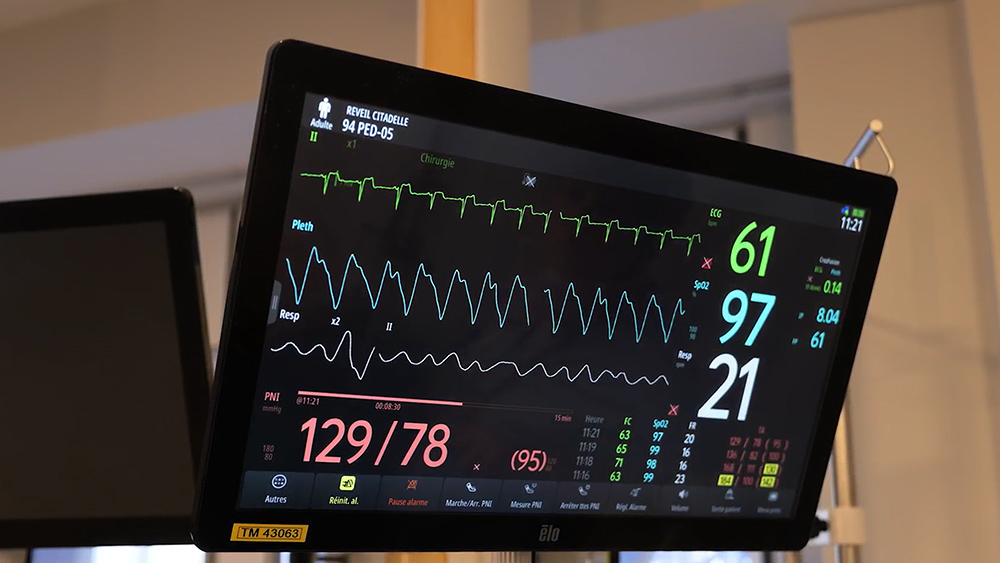
Data is recorded in several ways. We can retrieve up to 200 hours of recordings directly from the monitor in the operating room.
In a busy surgical suite where nursing teams may be managing multiple spaces at once, such data is vital to identify complications or deterioration even when they are not at the bedside.
Pascal added, "We now have the ability to continuously monitor the patient from admission to the operating room through to discharge from the recovery room, which is a major improvement."
Equipment Management at Scale: M-IoT
Operating across multiple hospital sites means managing a large and geographically distributed device inventory. When clinical staff move between theatres or sites, familiarity with equipment can directly affect efficiency. Ensuring that every team, regardless of which theatre they are in, encounters the same well-maintained devices requires a structured, hospital-wide approach to asset management.
Mindray's M-IoT platform has given Citadelle's operating room management team centralised oversight of device status and maintenance needs across both the Citadelle and Laveu sites.
Alexis Vanwambeke
Operating Room Manager, Citadelle Hospital
As manager of the surgical suites, it is important for me to guarantee quality equipment for the teams. And that is what happened here with the integrated solution. It allowed us to review the entire equipment inventory in a broader sense, with a surgical suite vision that includes the medico-technical rooms — namely the coronary angiography suite, the arteriology suite, the operating theatres at the Citadelle site, but also those at the Laveu site. This helps to keep users safe. They are used to finding the same equipment everywhere and also to keep our patients safe with quality equipment to monitor them.
Equipment Management at Scale: M-IoT
By implementing Mindray's integrated monitoring ecosystem, Citadelle Hospital has moved from fragmented, location-dependent patient visibility to continuous perioperative surveillance from OR admission through to PACU discharge. Advanced BIS DSA monitoring, integrated directly into the BeneVision patient monitor, gives anaesthesiologists a richer view of brain activity to support precise drug delivery and proactive management of anaesthesia depth. Across both hospital sites, M-IoT provides the bio-medical team with a consolidated, real-time view of equipment, supporting quality, staff confidence, and patient safety in equal measure.
The installation at Citadelle reflects the direction that modern perioperative care is taking: towards deeper integration, smarter monitoring, and clinical intelligence that keeps pace with the complexity of the patients being treated. With the right data in the right places, clinicians are empowered to deliver enhanced standards of care to their patients.
Reference:
[1] Citadelle website: https://www.citadelle.be/en-quelques-mots
[2] Igwe EO, et al. Incidence of postoperative delirium in older adults
undergoing surgical procedures: A systematic literature review and
meta-analysis. Worldviews Evid Based Nurs. 2023;20(3):195–207.
doi:10.1111/wvn.12649
[3] Aldecoa C, Bettelli G, et al. Update of the European Society of
Anaesthesiology and Intensive Care Medicine evidence-based and
consensus-based guideline on postoperative delirium in adult patients.
Eur J Anaesthesiol. 2024;41(2):81–108. doi:10.1097/EJA.0000000000001876